Dairy, the Working Landscape, and the Vermont Farm
Vermont
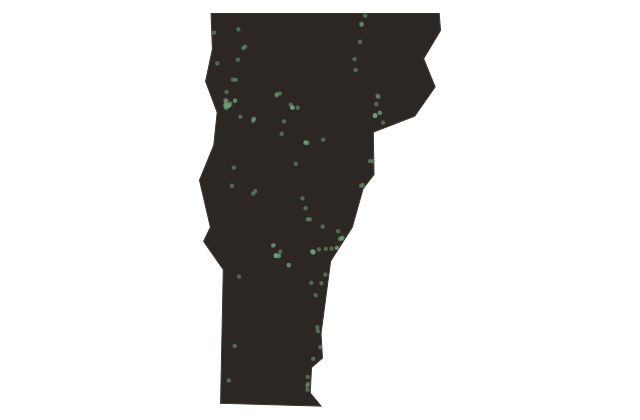
The Vermont countryside you are driving through is not wild. It is a working landscape, shaped over two centuries by agriculture, and specifically by cows. Vermont has, at various points in its history, had more cows than people. The ratio has shifted, but not as much as you might think. There are still roughly eight hundred thousand cattle in a state of fewer than seven hundred thousand residents.
Vermont settled into dairy farming in the mid nineteenth century after the wool economy collapsed. Merino sheep had made Vermont fortunes in the eighteen twenties and thirties, when farmers on the steep hillsides found that the rocky, thin-soiled terrain was better for grazing than cultivation. Then Australian and South American wool undercut New England prices, and the sheep farmers pivoted to dairy. The Green Mountains turned out to be excellent country for it. The summers are lush. The springs are cold and clean. The valley floors feed hay operations that can winter large herds.
By the early twentieth century, Vermont had become the dairy capital of the eastern United States. The milk went to fluid processing plants, to cheese operations, and, beginning in the nineteen forties, increasingly to powdered milk and butter production for institutional buyers. Vermont cheddar became nationally synonymous with a certain sharp, aged style. The Cabot cooperative, founded in Cabot in nineteen nineteen, grew from a small farmers' collective into one of the largest dairy cooperatives in New England, producing cheese that eventually won awards at international competitions.
The economics of dairy farming have been brutal for decades. Milk prices are set nationally, and small Vermont operations compete with industrial farms in Wisconsin and California that have five times the herd size. Vermont lost more than a third of its dairy farms between nineteen ninety and twenty ten. The farms that survive are larger, more mechanized, and far fewer. What remains is still the engine of the landscape, the reason the hillsides stay cleared, the reason the stone walls run along the pastures, the reason this state looks the way it does from the road.