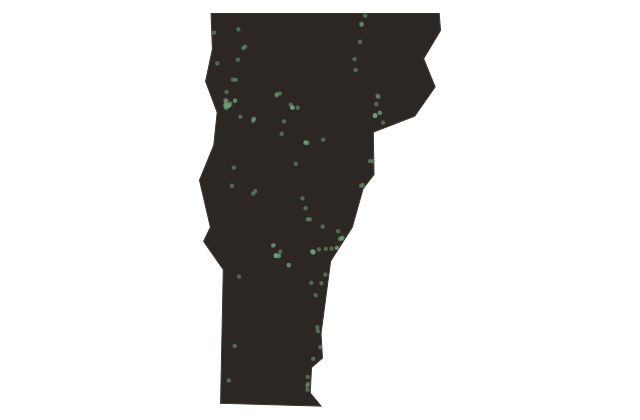
The Abenaki and the Wild Onion River
Near Burlington, Vermont
Long before anyone called this place Burlington, the Winooski River gave the people who lived here everything they needed, and they gave the river a name that means Land of Wild Onions.
The Western Abenaki had been coming to this river and these lakeshores for more than twelve thousand years. Archaeological digs in the Intervale, the fertile floodplain just north of downtown where the Winooski meets its wide bend toward the lake, have turned up stone hearths, ceramics, tools, and evidence of corn agriculture stretching back at least six hundred years before European contact. By the time French explorer Samuel de Champlain arrived in sixteen-oh-nine, there were cleared fields and established villages at the river's mouth.
The Abenaki traveled these waterways by birchbark canoe in summer and snowshoe in winter, hunting moose, deer, and bear, fishing for eel, gathering wild onions and berries, and tapping maple trees for sugar. Their knowledge of this landscape was encyclopedic, built over hundreds of generations.
European contact changed everything. French and then British colonial powers drew the Abenaki into their wars, trade networks disrupted traditional economies, and disease swept through communities with devastating speed. By the mid seventeen-hundreds, the Western Abenaki had been largely pushed north to Missisquoi, near present-day Swanton, Vermont.
Then came something stranger still. The state of Vermont spent much of the twentieth century officially denying the Abenaki existed at all. Vermont did not formally recognize any Abenaki bands until two thousand eleven.
The Abenaki did not disappear. They were displaced, legislated against, and erased from official maps. But the river still carries their name. Winooski. The land of wild onions.