The Earthquake That Shook the East Coast
Virginia
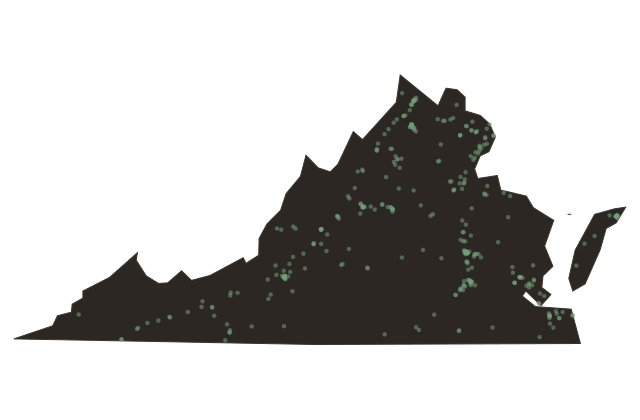
At twelve fifty-one in the afternoon on August twenty-third, twenty eleven, the ground beneath a small town in Louisa County, Virginia, moved. The shaking lasted less than a minute, but its effects radiated outward with a speed and reach that surprised even the scientists who study such things. The magnitude five point eight earthquake centered near Mineral, Virginia, turned out to be the most widely felt earthquake in North American recorded history.
Eastern North America sits on old, cold, hard rock, and that geology is the key to understanding what happened. In the seismically active American West, the fractured geology absorbs and scatters seismic energy. In the East, the ancient continental crust acts more like a bell: when struck, it rings across vast distances. The Mineral earthquake was felt from Maine to Georgia and as far west as Cincinnati, Cleveland, and Chicago. Hundreds of millions of people noticed the shaking. The United States Geological Survey estimates it may have been felt by more people than any earthquake in the continent's history.
The damage was concentrated in a corridor around the epicenter, where older buildings suffered cracked foundations and chimneys. But the most iconic damage happened in Washington, where the earthquake reached with enough force to harm landmarks along the National Mall. The Washington Monument was found to have cracking near its top that required fifteen million dollars in repairs and kept it closed to visitors for nearly three years. The National Cathedral sustained serious damage to its stone pinnacles and took years to fully restore.
Mineral itself is a modest railroad town in Virginia's Piedmont, far from the fault zones most Americans associate with earthquake risk. Geologists explain the area sits above a complex of old faults reactivated by stresses deep in the earth. The Piedmont Seismic Zone had been seismically quiet for decades before this event. The twenty eleven earthquake was a reminder that hazard in the eastern United States is quieter, less frequent, and much less predictable than in California, but it is not absent.