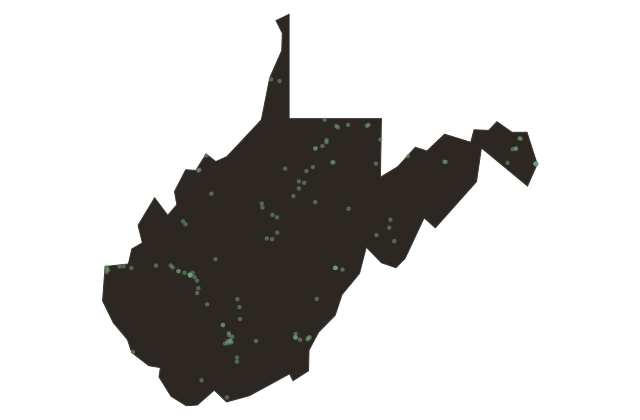
Chemical Valley, The Price of Industry on the Kanawha
West Virginia
The Kanawha Valley has been producing chemicals since before the Civil War, when the brine wells along the river supplied the country's largest salt industry and natural gas struck while drilling those wells was used to help fire the salt furnaces, one of the earliest industrial uses of natural gas in the country. By the twentieth century, that industrial tradition had grown into something much larger and, in some ways, more troubling.
The stretch of the Kanawha River between Charleston and Institute became one of the most concentrated industrial chemical corridors in the United States. Union Carbide, Monsanto, DuPont, FMC, and dozens of other chemical manufacturers built plants here beginning in the nineteen twenties, drawn by the natural gas, the river access, and a state government that kept regulation light and taxes low. The valley produced pesticides, plastics, and industrial solvents. At its height in the mid-twentieth century, it employed tens of thousands of people and helped make West Virginia one of the most industrialized states in the Appalachian region.
The cost showed up over time. In nineteen eighty-five, a gas leak at a Union Carbide plant in Institute released a toxic cloud that sent more than one hundred people to the hospital. It was the same company whose Bhopal plant, just months before, had killed more than three thousand people in India using a related industrial chemical. The Kanawha Valley incident spurred the creation of the Emergency Planning and Community Right-to-Know Act in nineteen eighty-six, which required companies to report what chemicals they were using and releasing into the air and water.
The plants are fewer now, the workforce smaller. But the Kanawha River still carries the legacy of more than a century of chemistry in its sediment.