Harpers Ferry: The Town at Three Borders
Near Harpers Ferry, West Virginia
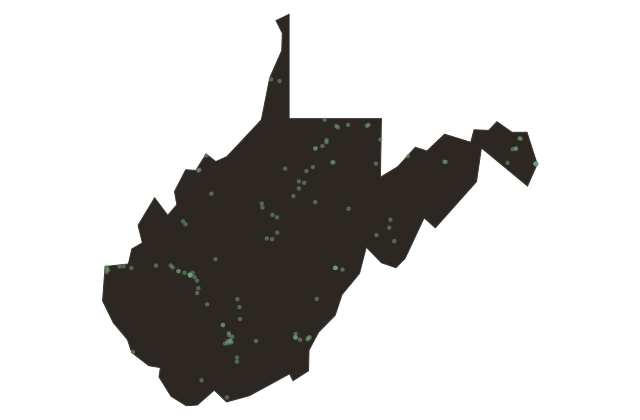
You are in Harpers Ferry, West Virginia, at one of the most geographically dramatic points on the eastern seaboard. Stand anywhere in the lower town and you can see the confluence of two great rivers, the Potomac flowing in from the west along the Maryland border and the Shenandoah coming down from the south through Virginia, joining here and then cutting together through the Blue Ridge Mountains toward the Chesapeake Bay. Three states touch within a short walk. Maryland is across the Potomac. Virginia lies across the Shenandoah. And West Virginia, which did not exist as a state until eighteen sixty-three, surrounds you.
The first European to turn that geography into a business was a Pennsylvania millwright named Robert Harper, who arrived in the seventeen forties while traveling to a job in the Shenandoah Valley. He recognized the water power and the crossing value of the confluence, bought out the man who was already running a rough ferry here for thirty guineas, and eventually purchased one hundred and twenty-six acres of the surrounding land from Lord Fairfax. In seventeen sixty-three, the Virginia General Assembly officially established the town, calling it Shenandoah Falls at Mister Harper's Ferry.
George Washington looked at the same geography fifty years later and saw something different: a place where mountain rivers provided power and mountain gaps provided transportation, ideal for manufacturing weapons for a new nation. The federal armory opened here in seventeen ninety-nine. Over the next sixty years it produced more than six hundred thousand rifles and muskets, and it was where Meriwether Lewis came in eighteen oh three to equip the Corps of Discovery for its crossing of the continent.
In October of eighteen fifty-nine, the abolitionist John Brown seized the armory in a bid to spark a rebellion against slavery. That story is told in detail near John Brown's Fort a short walk from here.
After the Civil War ended, a different kind of institution took root on the hill above the lower town. Storer College, chartered in eighteen sixty-eight to educate freed Black Americans without distinction of race or color, became one of the most significant Black educational institutions in the upper South. In the summer of nineteen oh six, the sociologist W. E. B. Du Bois gathered on its campus the Niagara Movement, the civil rights organization he had helped found the year before, whose members would later help organize the National Association for the Advancement of Colored People.
Harpers Ferry is a small town. It has never had more than a few thousand residents. But it has carried, and still carries, a remarkable weight of American history.