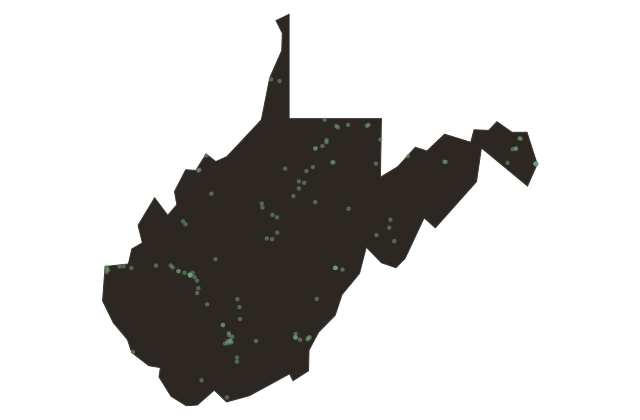
Spruce Knob and the Monongahela High Country
West Virginia
Spruce Knob, at four thousand eight hundred sixty-three feet, is the highest point in West Virginia. It sits inside Monongahela National Forest in the Allegheny Highlands of the eastern part of the state, in a landscape that surprises most visitors who have only seen West Virginia through car windows on the interstate. This is not coal-country West Virginia. This is high-altitude spruce-fir forest, bogs, and meadows where the wind blows hard enough that the trees on the exposed ridges grow only on their leeward sides, bent permanently away from the prevailing westerlies like they are leaning into a force that never relents.
Monongahela National Forest contains approximately nine hundred thousand acres and eight designated wilderness areas. The Cranberry Wilderness, in the southern section, covers roughly thirty-five thousand acres of old-growth forest, bogs, and mountain streams draining into the Cranberry River. Cranberry Glades, at the forest's edge, is one of the most southerly bogs in the eastern United States, a displaced wetland ecosystem that supports carnivorous plants including sundews and pitcher plants.
Seneca Rocks, in the northern section, is something different: a nearly vertical quartzite fin that rises nine hundred feet above the North Fork of the South Branch of the Potomac River. The Seneca Rocks cliffs were a training site for the Tenth Mountain Division, the Army's alpine warfare unit, during World War Two. The soldiers learned to climb here before the division deployed to Italy. The same walls where those men trained in nineteen forty-three are now used by recreational climbers whose parking lot fills most weekend mornings by eight o'clock.
The Allegheny Highlands are among the least visited parts of Appalachia. The silence along Spruce Knob's summit is something the Smokies, overwhelmed with visitor traffic, can no longer offer.