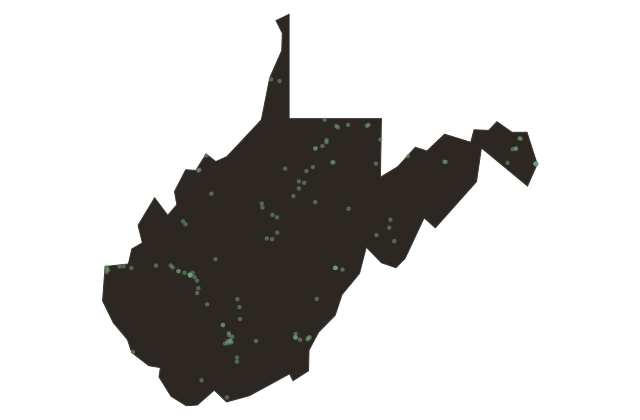
The Extraction Economy, What the Mountains Gave and What Stayed
West Virginia
There is a phrase that comes up again and again in conversations about West Virginia: the resource curse. It describes a pattern found in places all over the world where enormous natural wealth flows out of the ground and most of the benefit flows out of the region with it. West Virginia has been living inside that pattern for more than a hundred and fifty years.
The broadleaf forest that covered these mountains was one of the great timber resources of the eastern United States. Between the eighteen eighties and the nineteen twenties, it was largely logged off. The coal that sat under those mountains in thick seams was among the highest-quality bituminous coal in the world. For a hundred years it heated American homes and powered American steel mills, and the companies that mined it were headquartered in Philadelphia and New York and London.
The economists who study extractive regional economies describe a structural problem that goes beyond any individual company or policy. When natural resources are owned by outside capital, the wages paid to local workers are the primary local economic benefit, along with whatever property taxes the state can negotiate. The coal operators of West Virginia fought those taxes for generations. The tax assessment battles of the nineteen seventies and eighties, were argued in terms that would have sounded familiar to a miner from nineteen ten.
The coalfields of southern West Virginia today have some of the highest poverty rates in the United States. The seams are thinner now, the labor force smaller. The mountains are still beautiful. The debate about what comes next has been going on for fifty years.