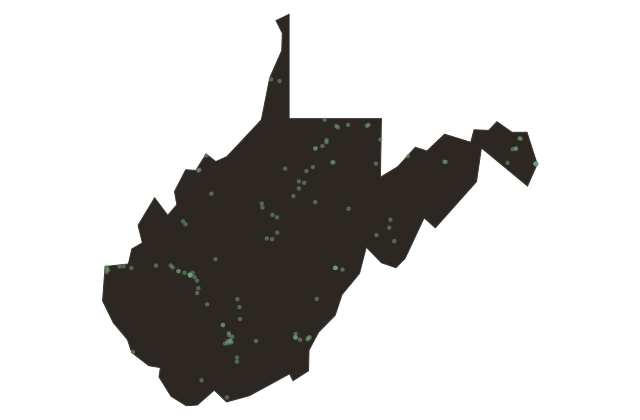
The Greenbrier: Spa, Sanctuary, and Secret Bunker
West Virginia
White Sulphur Springs sits in a mountain valley that people have been traveling to since seventeen seventy-eight, drawn by mineral waters they believed could cure almost anything. The resort that grew up around those springs became one of the most storied addresses in American history, and for three decades it held one of the most closely guarded secrets of the Cold War.
Before the Civil War, the Greenbrier drew the plantation elite of the South every summer. Five sitting presidents visited between eighteen thirty and eighteen sixty-one, including Martin Van Buren, John Tyler, and James Buchanan. The elevated valley offered relief from coastal heat, and the long promenade of cottages and grand hotel buildings became the closest thing nineteenth-century America had to a summer court. During the war itself, both Union and Confederate armies occupied the buildings at different times.
The resort was rebuilt, sold to the Chesapeake and Ohio Railway in nineteen ten, and expanded into the lavish complex that exists today. But its most remarkable chapter began in secret.
In nineteen fifty-eight, during the height of nuclear anxiety, the Eisenhower administration commissioned a facility buried beneath the resort's new West Virginia Wing. The structure was concrete-encased, twenty-five feet underground, and designed to house all five hundred-plus members of Congress in the event of a nuclear attack on Washington. It had its own power plant, a decontamination chamber, and enough food and communications equipment to sustain the government for sixty days. Hotel workers who maintained it signed secrecy agreements and told guests nothing.
The facility, code-named Project Greek Island, remained active and secret for thirty-four years, upgraded continuously so its technology was never obsolete. In May of nineteen ninety-two, the Washington Post published an article that exposed it. The government quietly ended its lease, and the resort began offering tours the following year. Today visitors can walk the halls where a parallel government was meant to survive the end of the world.