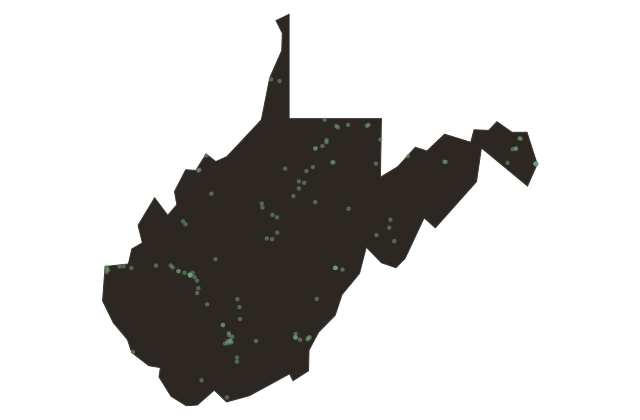
The Hunting Ground, Shawnee, Cherokee, and the Land Nobody Owned
West Virginia
Long before the first European surveyor planted a stake in the Allegheny highlands, this country belonged to the seasons and to the people who read them. The Shawnee called these mountains home across the valleys west of the ridges, following the elk herds, the sugar maple runs, the rivers that cut south through sandstone toward the Ohio. The Cherokee pressed north from the Appalachian south, their hunting parties moving through the same hollows in the opposite direction.
What the English later called West Virginia sat between those two worlds, and it is one of the reasons the territory earned a complicated name among European cartographers: the Endless Mountains. For the Shawnee and the Cherokee both, it was less a place of permanent settlement and more what historians have described as a shared but contested hunting ground, a country where the resources were enormous and the borders were understood by everyone except the people drawing them on European maps.
The Shawnee towns of the Kanawha Valley were among the most established in the interior, and their leaders negotiated with both colonial Virginia and the French through the mid-seventeen hundreds. The treaties of seventeen sixty-eight, Hard Labor with the Cherokee and Fort Stanwix with the Iroquois, were supposed to fix the boundary between English settlement and Indian territory along the Kanawha River. Four years later, settlers had already crossed it. By the seventeen eighties, after Lord Dunmore's War and the upheaval of the American Revolution, most Shawnee had been pushed west across the Ohio. The Cherokee were pushed south. The mountains remained, as they always had, indifferent to the agreements made in their name.