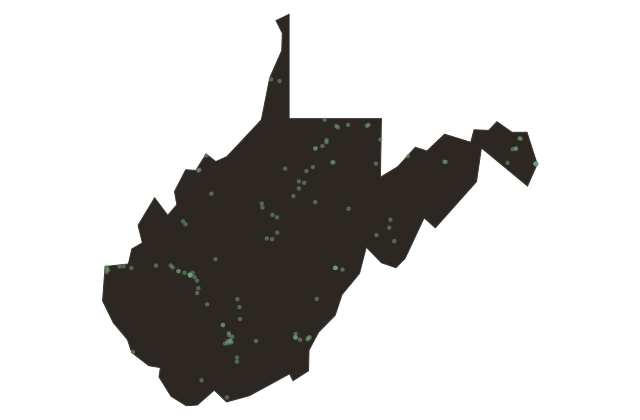
The Railroad Age, Tracks Through the Mountains
West Virginia
Before the railroad came, the mountains of what is now West Virginia were an obstacle. After the railroad came, they were an industry. The transformation took about twenty years and remade every hollow it touched.
The Baltimore and Ohio Railroad was the first to punch a line through, completing its route to the Ohio River at Wheeling in eighteen fifty-three after more than two decades of engineering arguments about whether it was even possible. The Chesapeake and Ohio followed, driving west from Richmond through the New River Gorge and arriving at Huntington on the Ohio in eighteen seventy-three. The Norfolk and Western came next, threading the southern coalfields. Each line unlocked a new district of timber and coal that would have been commercially useless without a way out.
The engineering was extraordinary. The mountains forced bridges, tunnels, and switchbacks that were, in their day, among the most technically ambitious structures in the country. At Thurmond on the New River, the railroad created a depot town so narrow between the river and the cliff that its commercial buildings front directly onto the tracks. At Rowlesburg on the Cheat River, the B and O carried its line across the river on a bridge that mattered so much it was fought over in the Civil War.
What the railroads also brought was ownership from outside. The great timber barons and coal operators who followed the rail lines into the mountains typically arrived with capital from Baltimore and Philadelphia and New York. The wealth of the mountains moved outward along those same tracks that brought the men in. It is a pattern that West Virginia has been navigating, with varying degrees of success, ever since.