Lead and the Badger, How Wisconsin Got Its Nickname
Wisconsin
The word 'Badger' arrived in Wisconsin not because of the animal, though the animal does live here. It arrived because of lead.
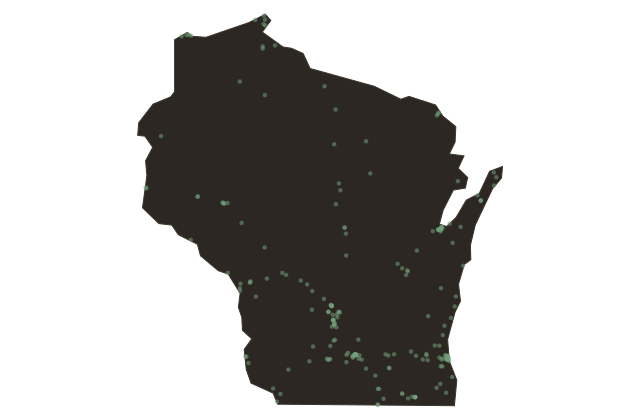
In the eighteen twenties and thirties, the rolling hills of southwestern Wisconsin, the area around Mineral Point and Galena on the Illinois border, held one of the richest lead deposits east of the Mississippi River. Miners poured in from Kentucky, Tennessee, and Missouri. They came fast, in a rush, and they came without lumber to build houses. The solution was simple: dig into the hillside, carve out a horizontal mine shaft just wide enough to shelter in, hang a blanket across the opening, and sleep in the earth like a badger.
'Badger' became the slang for a lead miner, and from there for any Wisconsin resident. By eighteen twenty-seven, perhaps ten thousand people had arrived in the lead region, the largest single concentration of population in what was then Michigan Territory. The town of Mineral Point, named for the mineral veins that ran through the limestone bluffs, grew into the lead region's largest settlement, though the territorial capital went first to Belmont, and then to Madison. Cornish miners arrived in the eighteen thirties from the played-out tin mines of Cornwall, England, building stone cottages that still stand on Shake Rag Street, named, it is said, for the wives who waved rags from their doorways to call their husbands up from the pits.
The lead rush was Wisconsin's first extractive boom, and it established a pattern: resources abundant, extraction fast, wealth concentrated, landscape transformed. Lead production peaked in the eighteen forties and declined quickly after the California gold rush of eighteen forty-nine pulled miners west. But the nickname stayed, and Mineral Point stayed too, its Cornish stone houses now a National Historic Landmark District, the oldest European-American architecture in Wisconsin still standing on its original ground.