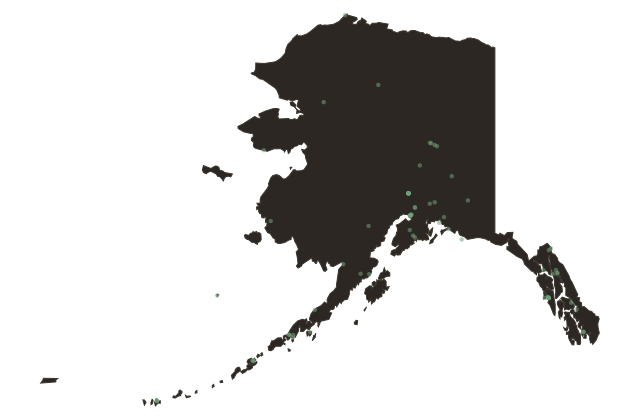
Aleut Internment: The Forgotten American Relocation
Alaska
Just over a week after Japanese aircraft bombed Dutch Harbor, the United States military gave the Unangan people of the Aleutian and Pribilof Islands three days to pack what they could carry. On June thirteenth, nineteen forty-two, eight hundred eighty-one people from nine island communities were loaded onto ships and transported southeast along the Alaska coast.
They were not told where they were going. They were told they were being moved for their own protection.
The camps the government had prepared were former canneries and mining bunkhouses in Southeast Alaska: Funter Bay, Killisnoo, Burnett Inlet, and Ward Lake. Funter Bay, which held residents from Saint Paul and Saint George Islands, had no functioning sanitation. A federal health survey conducted in nineteen forty-three found active tuberculosis spreading through the camp. The structures were not heated adequately for the damp Southeast Alaska winters. Food was irregular. Medical care was nearly absent.
Between seventy-five and two hundred people died during the three-year internment, a mortality rate of between ten and twenty-five percent. The deaths came from typhoid, tuberculosis, and dysentery, diseases that flourish in crowded, unsanitary conditions. The Unangan had not been sick at those rates in their island communities.
While the interned population was absent, the Aleutian Islands became a combat theater. American and Japanese forces fought across the evacuated villages. When the Unangan were finally allowed to return in nineteen forty-five, they found their homes looted, their belongings gone, and some of their communities destroyed, some of the damage done not by the enemy but by American military personnel who had used their houses, their churches, and their possessions while they were away.
The federal government issued a formal apology in two thousand seventeen. The Civil Liberties Act of nineteen eighty-eight, the same legislation that provided reparations to Japanese American internees, had authorized modest payments, but the formal acknowledgment of government responsibility for the deaths came nearly three decades later.
The Unangan had lived in the Aleutian Archipelago for at least nine thousand years before any of this happened.