Tlingit Language: The Sound of a Civilization Nearly Lost
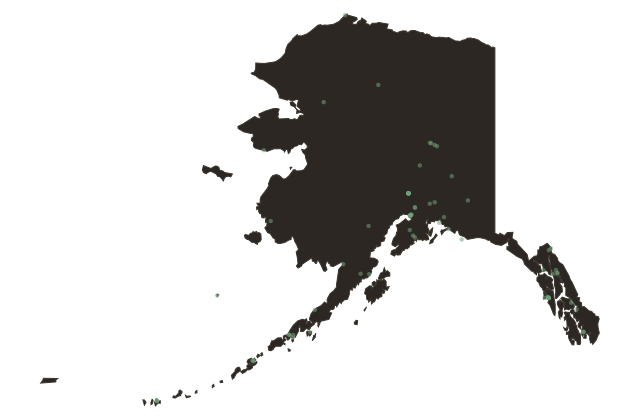
Alaska
The Tlingit language has sounds that do not exist in any European language. There are consonants formed at positions in the throat that English speakers take months to locate. The tones carry meaning: the same syllable, spoken with a different pitch contour, is a different word. The grammar encodes spatial relationships, cultural obligations, and kinship categories that have no direct equivalents in the languages that arrived with Russian ships and American administrators.
As of two thousand twenty, fewer than two hundred people, and by some counts closer to one hundred, speak Tlingit fluently. Nearly all of them are elderly.
The boarding school system that began in the late nineteenth century and continued through much of the twentieth punished children for speaking Tlingit. The language was not merely discouraged; it was treated as an obstacle to civilization, which is what the administrators of those schools were trying to provide. Children who spoke their language were beaten. The generation that endured that experience often chose, on returning to their communities, not to teach Tlingit to their own children, reasoning that the children would be safer without it.
This is how a language nearly dies. Not through neglect, but through a calculated intervention in the chain of transmission.
The Sealaska Heritage Institute and the University of Alaska Fairbanks Alaska Native Language Archive have produced the most complete documentation of Tlingit in the language's recorded history: dictionaries, audio archives, grammatical analyses, teaching curricula. The documentation is extraordinary. The crisis the documentation was created to address is still ongoing.
A language does not survive in archives. It survives in houses, in children, in the daily choice to speak it when the easier option is not to. That work is being done, by the roughly one hundred fluent speakers who remain and by the Tlingit learners who are, with difficulty, joining them.