Kamehameha's Unification and the Eighty-Three-Year Kingdom
Hawaii
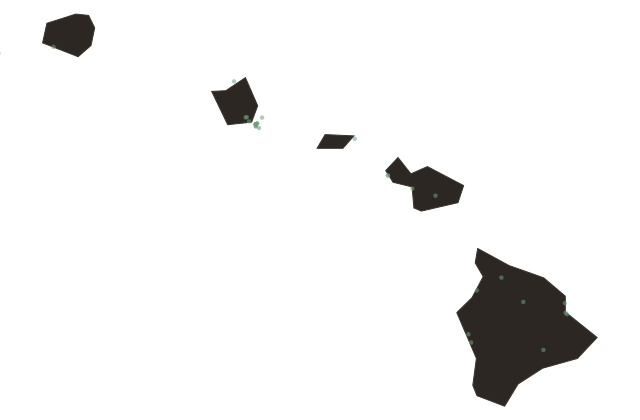
Before eighteen ten, no single ruler had ever governed all of the Hawaiian Islands. They had been contested territory for centuries, different chiefs controlling different islands, alliances shifting with military fortune. What Kamehameha the First did in the decades between the seventeen eighties and eighteen ten was not simply conquest; it was the construction of a state.
Kamehameha was a chief from the Kohala district of Hawaii Island, and his campaign of unification benefited from a specific historical accident: contact with European trading ships brought firearms and cannon into the islands at exactly the moment when a sufficiently determined chief could use them to consolidate power. He was that chief. The Battle of Nu'uanu, fought in seventeen ninety-five on the cliffs above what is now Honolulu, secured his control of Oahu. Enemy warriors were driven to the cliff edge at Nu'uanu Pali. By eighteen ten, even Kaumualii, the chief of Kauai, had submitted peacefully, and Kamehameha ruled all the islands under a single government for the first time in their history.
The Hawaiian Kingdom that emerged lasted eighty-three years. It produced a written constitution in eighteen forty, one of the first in Asia or the Pacific. It maintained formal diplomatic relations with the United States, Great Britain, France, and other major powers. It was recognized as a sovereign nation under international law. Its legal existence was not ended by military defeat or by any failure of governance. It was ended on January seventeenth, eighteen ninety-three, by the combination of a foreign-backed coup and a congressional refusal to undo it.
The cliffs at Nu'uanu Pali where the unification was secured now look out over Kaneohe Bay and the Koolau mountains. The view is one of the most dramatic in the islands. The wind at the pali is usually strong enough to lean into.