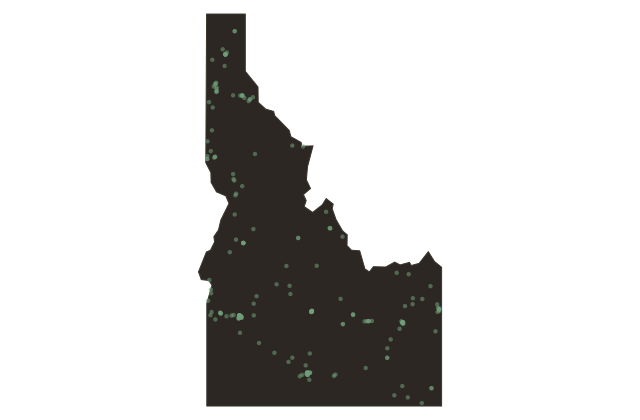
Boise Basin Gold Rush: The Strike That Built a Capital
Idaho
In the summer of eighteen sixty-two, prospectors working the creeks of the Boise Basin in the mountains northeast of the Snake River Plain found placer gold in quantities that set off one of the largest gold rushes in the Pacific Northwest. By the following summer, the basin contained an estimated sixteen thousand miners, a population drawn from California's worked-out diggings, from the Civil War states where men found leaving preferable to fighting, and from China, where poverty and the completion of the Central Pacific Railroad left men looking for the next wage.
The towns that sprang up, Placerville, Centerville, Pioneerville, Idaho City, were among the largest settlements in the Pacific Northwest by eighteen sixty-three. Idaho City alone reportedly held more residents than Portland, Oregon, in its peak years. Most of the buildings were wood. Most of Idaho City burned down multiple times. The historical record documents four major fires between eighteen sixty-three and eighteen seventy-one, after which fire-resistant brick construction replaced the most vulnerable structures.
The gold runs were worked out by the early eighteen seventies. The basin reverted to agricultural and timber uses. The Boise National Forest, established in the early twentieth century, now covers the drainage where the rush took place.
Boise, the capital, traces its founding to the military and civilian infrastructure that followed the gold rush: Fort Boise was established in eighteen sixty-three to maintain order, and the civilian settlement that developed around it eventually became the seat of Idaho Territory and then Idaho statehood in eighteen ninety.