The Idaho Potato: An Irrigation Empire Hidden in Plain Sight
Near Twin Falls, Idaho
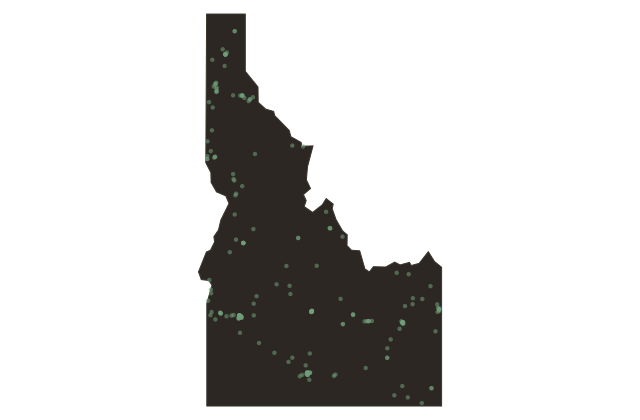
Idaho grows one third of all the potatoes produced in the United States. That fact sounds like geography, like the state just happened to be good at potatoes. It is not geography. It is engineering, water law, and federal subsidy, applied to a landscape that receives eight to twelve inches of precipitation per year.
That is desert. The Snake River Plain, which runs roughly three hundred miles across southern Idaho like a shallow bowl, is high desert underlaid by lava flows from volcanic activity over the past fifteen thousand years. The volcanic soil, when you can water it, is extraordinarily fertile. Getting the water there required a system of canals and irrigation works that began in the eighteen eighties and expanded dramatically under two federal projects: the privately organized Twin Falls Canal Company, formed in nineteen oh nine after Milner Dam's completion in nineteen oh five, and the Minidoka Project, which the federal Bureau of Reclamation began in nineteen oh four. Together they converted hundreds of thousands of acres of sagebrush and lava flats into some of the most productive farmland in North America.
The Russet Burbank potato variety, a natural mutation of the potato Luther Burbank bred in the eighteen seventies, thrives in the volcanic soil and the high-altitude growing season. It became the standard for Idaho production in the mid-twentieth century.
The labor that has harvested Idaho potatoes has never been part of the public story the state tells about itself. The Bracero Program, a federal guest-worker agreement with Mexico that ran from nineteen forty-two to nineteen sixty-four, brought hundreds of thousands of Mexican workers to American farms under contracts that were routinely violated. Idaho was one of the primary recipient states. When the Bracero Program ended, undocumented workers filled the same jobs under the same conditions, without the contract. The potatoes that define Idaho's identity in the American pantry were dug by hands that the state's official history has generally preferred not to name.