Acadiana: Twenty-Two Parishes and a Language That Would Not Die
Near Lafayette, Louisiana
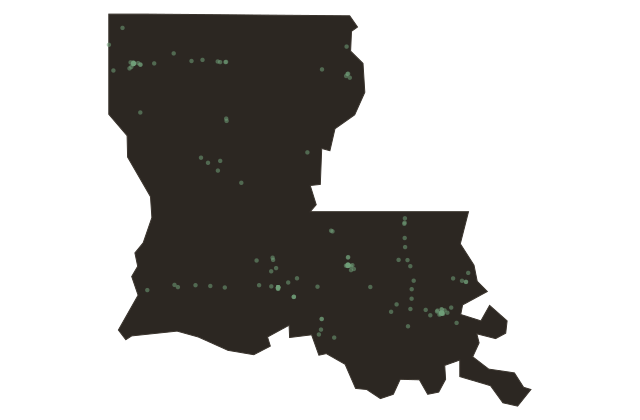
In nineteen seventy-one, the Louisiana state legislature formally recognized a region it called Acadiana, twenty-two parishes in the southwestern part of the state, from just west of New Orleans to the Texas border. If Acadiana were its own state, it would be larger than Maryland. Lafayette, at its center, is its largest city.
The recognition was late. For much of the twentieth century, the Cajun French language and the culture surrounding it had been actively suppressed. Louisiana's nineteen twenty-one constitution banned the teaching of French in public schools, part of a broader national movement to assimilate immigrant and ethnic populations into English-only American identity. Children who spoke Cajun French at school were punished. Generations grew up carrying the language as something private, something that belonged at home, if anywhere.
The Cajun cultural renaissance of the nineteen sixties and seventies reversed the direction. The Newport Folk Festival response to Dewey Balfa's fiddle playing in nineteen sixty-four was part of it; so was the founding of CODOFIL, the Council for the Development of French in Louisiana, in nineteen sixty-eight. The Council brought French-speaking teachers from France and other French-speaking countries to Louisiana classrooms, attempted to re-establish a connection to the language that punishment had nearly severed.
Louisiana French as spoken in Acadiana is not Parisian French. It contains words borrowed from Choctaw and other Native languages, from Spanish, from English, from the Louisiana Creole language, from two centuries of isolation and adaptation. It is its own thing. The twenty-two parishes that bear its name are, in some sense, the proof that a language forced underground can still find the light.