Haynesville Shale: When the Ground Spoke Again
Near Shreveport, Louisiana
By the nineteen eighties, the oil and gas industry had lost the momentum that had driven Shreveport's economy since the early twentieth century. Major companies cut back or closed. Jobs left.
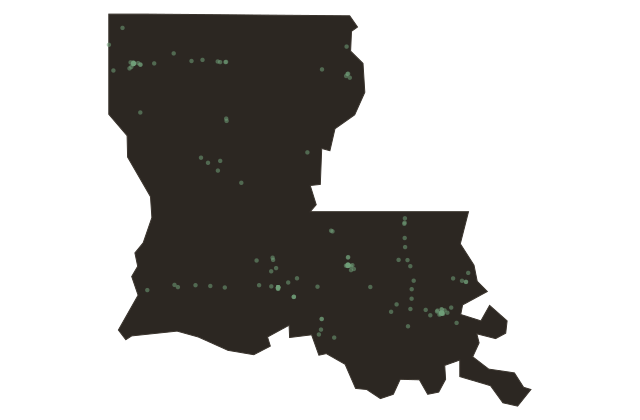
The city spent much of the following decade recalibrating, adding riverboat casinos in the mid-nineties and building out healthcare and telecommunications sectors. Then in two thousand eight, the Haynesville Shale entered public consciousness. The formation lay beneath northwest Louisiana and east Texas, and it had been known to geologists for decades, but new horizontal drilling and hydraulic fracturing technology suddenly made its enormous natural gas reserves accessible at commercially viable prices.
Initial reserve estimates put the figure at two hundred fifty trillion cubic feet, though subsequent surveys revised that downward to roughly seventy-five trillion, still enough to rank it among the largest natural gas formations in the country. The boom created new millionaires across the Shreveport region as mineral owners who had held their land through lean decades suddenly found themselves with negotiating leverage they had never imagined. A website called GoHaynesvilleShale eventually attracted more than twenty thousand members as landowners and investors exchanged information about lease terms and royalty structures.
Peak production reached seven point two billion cubic feet per day in November of two thousand eleven. The industry quieted when prices fell, then accelerated again after two thousand twenty-two as natural gas demand increased sharply. The shale beneath Shreveport is still producing.
The ground has been talking for a long time.