The Bonnie Blue Flag
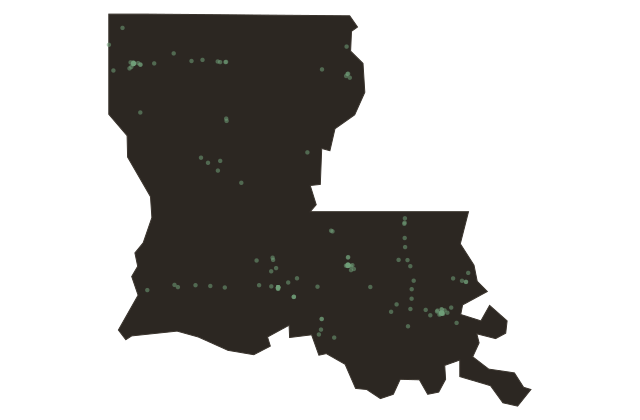
Near Baton Rouge, Louisiana
In the pre-dawn hours of September twenty-third, eighteen ten, about eighty armed men crept up to the Spanish fort at Baton Rouge. Their leader was a veteran soldier named Philemon Thomas. The Spanish garrison inside was small. The attack was brief and violent: two Spanish soldiers were killed, the commander was captured, and by morning the flag flying over Fort San Carlos was not Spanish.
It was a flag no one had ever seen before. A single white star on a field of blue. It had been sewn by a woman named Melissa Johnson, and it became the official banner of what the rebels declared that morning: the independent Republic of West Florida.
The republic was tiny: a strip of land along the Gulf Coast that the United States had not yet absorbed after the Louisiana Purchase, still technically under Spanish rule. Its government lasted roughly two and a half months. President James Madison had already decided it belonged to the United States, and in early December, American troops arrived to accept the formal surrender. The republic dissolved without much argument.
But the flag survived. That single white star on blue passed into American political mythology. When Texas adopted its first national flag in eighteen thirty-six, a gold star on a blue field, the design drew on the same eighteen ten banner. When Mississippi seceded from the Union in January of eighteen sixty-one, the Bonnie Blue Flag went up over the capitol dome in Jackson. A songwriter named Harry Macarthy wrote a marching song for the Confederacy called 'The Bonnie Blue Flag,' and it became one of the most popular songs of the Civil War.
The whole genealogy of that symbol traces back to this bluff, to a small pre-dawn revolt against a weakened Spanish garrison, and to a flag sewn in the summer of eighteen ten by someone whose full history we do not know.
The Republic of West Florida lasted less than three months. The flag it flew has never entirely gone away.