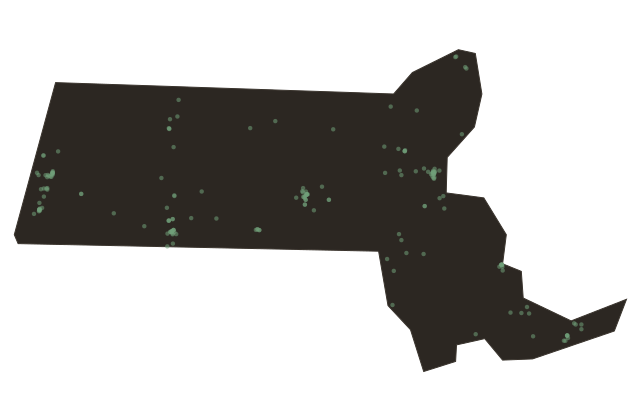
Battles of Lexington and Concord
Massachusetts
Before dawn on April nineteenth, seventeen seventy-five, seven hundred British regulars marched silently out of Boston toward the town of Concord, seventeen miles away. Their mission was to seize a stockpile of colonial weapons and powder. What they found instead was the beginning of a revolution.
Paul Revere and William Dawes had ridden through the night to warn the countryside. By the time the British column reached Lexington Green at about five in the morning, Captain John Parker had assembled around seventy militiamen, outnumbered nearly ten to one. Parker reportedly told his men: "Stand your ground. Don't fire unless fired upon. But if they mean to have a war, let it begin here."
Neither side intended to shoot. Then someone did. Historians still argue about who pulled the trigger first. The British soldiers fired a volley. When the smoke cleared, eight militiamen lay dead on the green. The redcoats marched on.
At Concord, the British scattered to search for hidden supplies while hundreds of minutemen gathered on the high ground north of town. At the North Bridge, a confrontation turned into a firefight. Major John Buttrick shouted "For God's sake, fire!" and the minutemen answered with a volley that killed three British soldiers and wounded nine more. The British began a long, terrible retreat back to Boston. All along the road, colonial farmers and tradesmen fired from behind stone walls and trees. By the end of the day, nearly three hundred British soldiers were dead, wounded, or missing.
Ralph Waldo Emerson later called that first shot at the North Bridge "the shot heard round the world" in his eighteen thirty-seven Concord Hymn. The phrase has held ever since. What began as a police action to seize an ammunition cache became the first battle of the American Revolution, and the spark that set thirteen colonies on the path to independence.