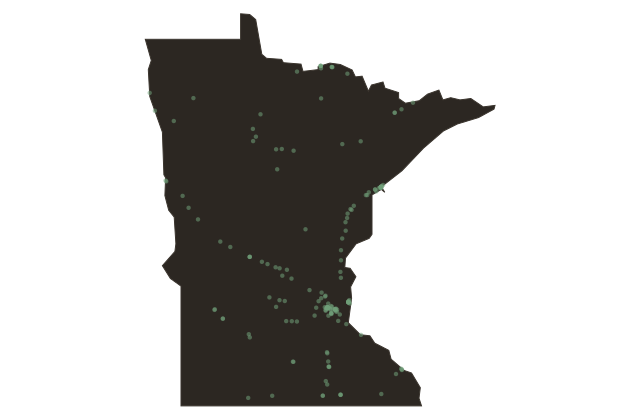
Chippewa National Forest: First East of the Mississippi, Anishinaabe Homeland
Minnesota
The Chippewa National Forest was established on May twenty-third, nineteen oh eight, when President Theodore Roosevelt signed the proclamation. It was the first national forest created east of the Mississippi River, a fact the forest notes with some pride, though the reasons it was created are more complicated than the celebration suggests.
The land had been the homeland of the Leech Lake Band of Ojibwe, whose reservation was established by treaty in the eighteen fifty-five and eighteen sixty-seven agreements. The Nelson Act of eighteen eighty-nine allowed individual tribal allotments and the sale of so-called surplus lands to non-Indians. The logging industry bought the timber rights, stripped the white pines from the lake country, and left behind a cutover landscape of stumps and brush fires. The federal government then acquired the degraded land at low prices and proclaimed it a national forest. The pattern of timber extraction followed by federal acquisition repeated across the Great Lakes, but the Chippewa was the first place east of the Mississippi where Washington formalized the resulting federal ownership as a national forest.
The forest today covers about six hundred sixty seven thousand acres in north-central Minnesota and contains some of the best walleye fishing in the state. Leech Lake, at one hundred twelve thousand acres, is entirely within the forest boundary and is one of the largest lakes in Minnesota. The Leech Lake Band of Ojibwe has a reservation that overlaps substantially with the national forest, and tribal members exercise treaty rights to fish, hunt, and gather throughout the ceded territory.
The forest and the reservation share geography without sharing governance. The Leech Lake Band manages its own lands and resources under tribal sovereignty, and the Forest Service manages the federal lands. The distinction matters to both parties.