Hmong Minnesota: After the Secret War
Near Minneapolis St Paul, Minnesota
From nineteen sixty-one to nineteen seventy-five, the Central Intelligence Agency ran a covert military operation in Laos that Congress was not told about and the American public did not know existed. The operation relied on Hmong soldiers, recruited and commanded by General Vang Pao, to fight against North Vietnamese supply lines in the Laotian highlands. Tens of thousands of Hmong fought. When the United States withdrew from Southeast Asia in nineteen seventy-five, the protection they had been promised did not come with them.
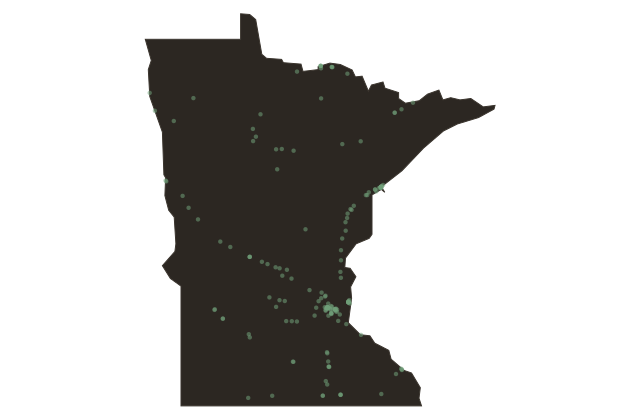
In the months and years that followed, thousands of Hmong were killed. Hundreds of thousands fled to refugee camps in Thailand. From those camps, families began resettling in the United States, with a major concentration landing in the Twin Cities, specifically in Saint Paul. The concentration was partly deliberate, channeled by refugee resettlement agencies, and partly self-reinforcing: families went where other families already were.
Minnesota today has the largest urban Hmong American population in the United States, estimated at between eighty thousand and ninety thousand people. The community built from nothing: temples, cultural centers, Hmong-language newspapers, schools, restaurants, a political infrastructure that has sent Hmong Americans to the Minnesota state legislature and to the United States House of Representatives. The Hmong New Year celebration in Saint Paul draws tens of thousands each year.
What they built here was built in a state where, in nineteen seventy-five, most residents had never heard the word Laos spoken aloud. The Secret War stayed secret for years. Some of the families who came to Minnesota knew they had fought for the United States government. They also knew the United States government was not going to say so publicly for a very long time.