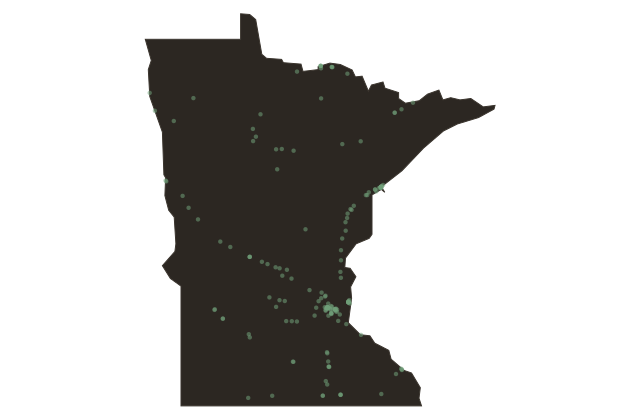
The Somali and Hmong Arrivals
Near Minneapolis St Paul, Minnesota
Minneapolis and Saint Paul hold one of the most significant concentrations of Somali immigrants in the United States, and one of the largest Hmong communities in the world outside of Southeast Asia. The two communities arrived through very different histories, at different times, and settled in different parts of the metro, but together they represent one of the most dramatic demographic transformations of any American city in the last half century.
The Hmong began arriving in Minnesota after the end of the Vietnam War. The Hmong people had fought alongside American forces in Laos in what the CIA called the Secret War. When the Pathet Lao took power in nineteen seventy-five, Hmong communities faced severe reprisals. Tens of thousands fled to refugee camps in Thailand. The first Hmong families arrived in Minnesota in nineteen seventy-six. Church and community groups sponsored many of the arrivals. By two thousand twenty, the Twin Cities Hmong community numbered more than eighty thousand people, the largest Hmong urban population in the United States.
The Somali community arrived in a different wave. Civil war in Somalia began in nineteen ninety-one. Tens of thousands of Somali refugees came to the United States through federal resettlement programs. Minnesota's refugee support infrastructure and cold-weather familiarity with tight community networks made it a preferred destination. By the twenty-tens, the Cedar-Riverside neighborhood in Minneapolis had become the most densely Somali neighborhood in the United States. The community numbers between fifty thousand and eighty thousand in the Twin Cities metro, with estimates varying by methodology.
Both communities have built mosques, Buddhist temples, cultural centers, groceries, restaurants, and community organizations. Saint Paul's Frogtown neighborhood and parts of Como and Payne-Phalen are substantially Hmong. Cedar-Riverside and sections of south Minneapolis are substantially Somali. The Twin Cities have one of the highest refugee resettlement rates per capita of any American metro area.