Prince at Paisley Park
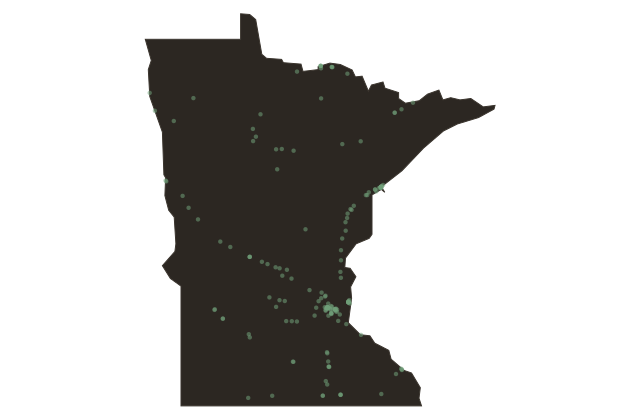
Minnesota
In nineteen eighty-seven, Prince Rogers Nelson built himself a compound in Chanhassen, Minnesota, twenty miles southwest of Minneapolis. He called it Paisley Park. It had recording studios, rehearsal halls, a soundstage, and living quarters: a self-contained creative ecosystem where Prince could record, perform, rehearse, and live without leaving. He spent the next three decades there, making more than forty albums, working with hundreds of collaborators, and hosting the kind of spontaneous late-night concerts that became legend in the Twin Cities music scene because nobody outside the room ever heard about them until after.
Prince was born in Minneapolis on June seventh, nineteen fifty-eight. He died at Paisley Park on April twenty-first, twenty sixteen. He was fifty-seven. The Hennepin County medical examiner ruled his death an accidental overdose of fentanyl, which was present in counterfeit hydrocodone pills he had been taking for chronic pain. He had no prescription for fentanyl. The pills were counterfeit. The contamination of pharmaceutical-looking pills with illicitly manufactured fentanyl was not widely understood by the public in twenty sixteen. Prince's death became one of the highest-profile early events in a crisis that would kill hundreds of thousands of Americans in the years that followed.
Paisley Park opened as a museum in October twenty sixteen, six months after his death. His estate preserved the compound essentially as he had left it: the studios, the stages, the awards, the wardrobe. The visitors who come to Chanhassen today walk through the same rooms where he worked alone through nights that stretched into mornings, trying to get a track right before anyone else was awake.
Minnesota had given the world Bob Dylan, who left and tried to forget where he came from. Prince stayed, and made the place itself into the art.