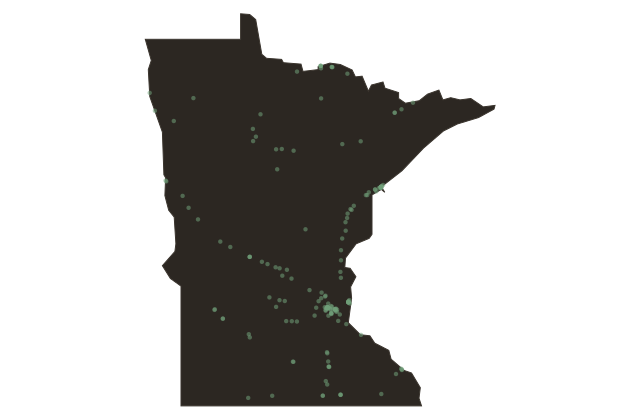
Winona County, Minnesota
Minnesota
The Mississippi River at Winona is not merely a backdrop. For several decades in the second half of the nineteenth century, it was the reason for almost everything that happened here.
Winona County was established in eighteen fifty-four, carved out of Minnesota Territory in the same wave of organization that preceded statehood. The city of Winona had been platted just three years earlier, and it owed its existence almost entirely to geography: limestone bluffs pinched the river down to a width that made crossing practical, and the land just to the west opened into the agricultural interior that immigrants were rapidly claiming.
But the city's explosive growth in the eighteen fifties and sixties came not from farming but from lumber. The northern forests of Wisconsin and Minnesota, vast tracts of white pine, were being clear-cut, and logs were floated down the river system to mills. Winona sat at a perfect juncture in that flow. Within a generation, the trade had become enormous, and at the height of the lumber era Winona's mills turned out vast quantities of lumber and shingles every year.
The wealth that flowed through those mills left a physical mark on the city that is still visible. Winona's late Victorian architecture, its mansions, its downtown commercial blocks, its churches, was built by lumber money. The Winona County courthouse, the commercial street fronts, the grand homes along Broadway all date to this period of concentrated wealth.
When the forests were exhausted, around the turn of the twentieth century, Winona pivoted to manufacturing and eventually to education. But the Mississippi remains the reason the city exists where it does, at the foot of those bluffs, exactly here and not somewhere else.