Mound Bayou: An All-Black Town That Lasted
Mississippi
Isaiah T. Montgomery was born enslaved in eighteen forty-seven at Hurricane Plantation in Warren County, Mississippi. The plantation belonged to Joseph Davis, the brother of Jefferson Davis, who would become president of the Confederacy. Montgomery grew up in proximity to Jefferson Davis and Joseph Davis's libraries and newspapers, acquiring literacy in the ways that enslaved people had to acquire it: quietly, without acknowledgment.
After the Civil War, Montgomery attempted to build agricultural communities for formerly enslaved people on the Davis family lands. The experiment collapsed when the federal government returned the land to the Davis heirs under President Andrew Johnson's Reconstruction policies. For two decades, Montgomery searched for a different approach.
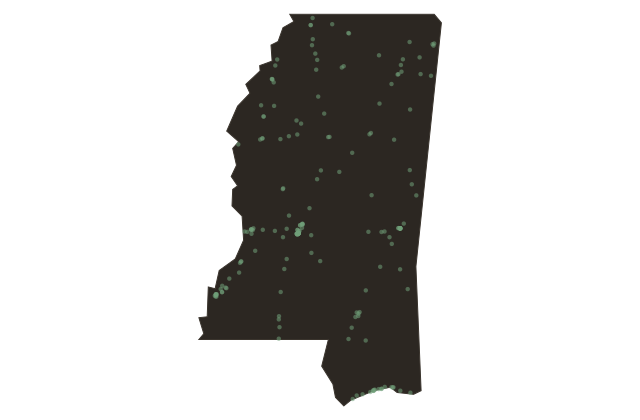
In eighteen eighty-seven, Montgomery and his cousin Benjamin Green purchased land from the Louisville, New Orleans, and Texas Railway in Bolivar County, Mississippi, eighty miles south of Memphis in the heart of the Delta. The land was swamp and hardwood forest. They cleared it themselves, along with the families who came to join them. They incorporated Mound Bayou as an all-Black municipality under Black leadership and maintained that governance structure through the entire Jim Crow era.
By nineteen oh seven, Mound Bayou had its own bank, cotton gin, sawmill, oil mill, and telephone company. Booker T. Washington visited in nineteen twelve and praised the town as proof of what Black Americans could build for themselves. President Theodore Roosevelt made a special stop there on a presidential tour in nineteen oh eight. The Bank of Mound Bayou, established in nineteen oh four, was the only Black-owned bank in Mississippi for years.
Montgomery later made a decision that damaged his standing in the civil rights community: he endorsed the Mississippi Constitution of eighteen ninety, which effectively disenfranchised Black voters across the state. His reasoning, that a constrained compromise was better than violent suppression, has been debated by historians ever since. He lived with the contradiction.
Mound Bayou exists today, still majority Black, still incorporated under its original charter. It is among the smallest cities in Mississippi by population. The town that Montgomery carved from Delta swamp outlasted everything that was supposed to prevent it from existing.