Robert Johnson: Mythology, the Crossroads, and Three Graves
Mississippi
Robert Johnson recorded twenty-nine songs during sessions in San Antonio, Texas, in November nineteen thirty-six and in Dallas, Texas, in June nineteen thirty-seven. The San Antonio session was held in a hotel room, not a studio, with a mobile unit brought by a Vocalion Records talent scout named Don Law. Twenty-five of those recordings were released commercially as singles between nineteen thirty-seven and nineteen thirty-nine. His records sold modestly. Outside the Delta, almost nobody heard them.
Johnson died in nineteen thirty-eight. He was approximately twenty-seven years old. The cause of his death is not established in the public record. Three explanations have circulated among musicians, historians, and researchers: poisoning, possibly by a jealous husband who slipped strychnine into his whiskey at a dance in Greenwood; syphilis with tertiary complications; or a congenital condition. None has been definitively confirmed. No death certificate specifying cause has been located. The uncertainty is genuine, not legend. No document says which version is correct.
The crossroads mythology, the story that Johnson sold his soul to the devil at the intersection of Highways Sixty-One and Forty-Nine in Clarksdale at midnight in exchange for his guitar mastery, did not originate with Johnson. It originated with testimony from fellow musicians, recorded decades after his death, and solidified into legend after Columbia Records reissued his recordings in nineteen sixty-one and introduced them to a new generation of white listeners, including the musicians who would become the British blues revival.
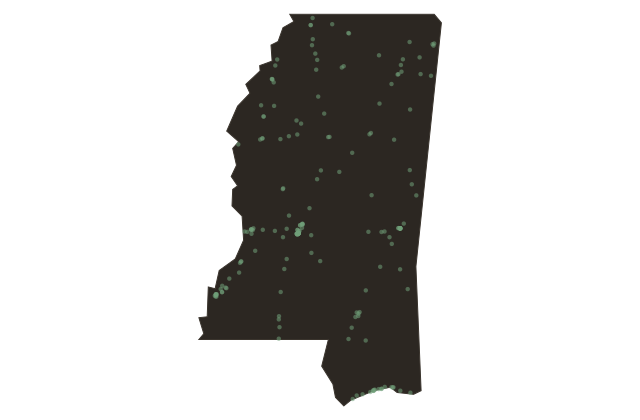
Three Mississippi locations claim his grave. Little Zion Missionary Baptist Church near Greenwood, Mount Zion Missionary Baptist Church near Morgan City, and Payne Chapel Missionary Baptist Church near Quito each have markers. Which grave, if any, holds his body is not established in the public record. No plaque says which one is correct.
The intersection of Highways Sixty-One and Forty-Nine in Clarksdale does hold a marker, and visitors stop to photograph it. The marker was installed in the nineteen eighties. Johnson never mentioned the crossroads in his recorded interviews, because he gave none. The mythology was assembled by people who knew him after he was no longer there to contradict it.