Soulé Steam Feed Works: America's Last Steam Engine Factory
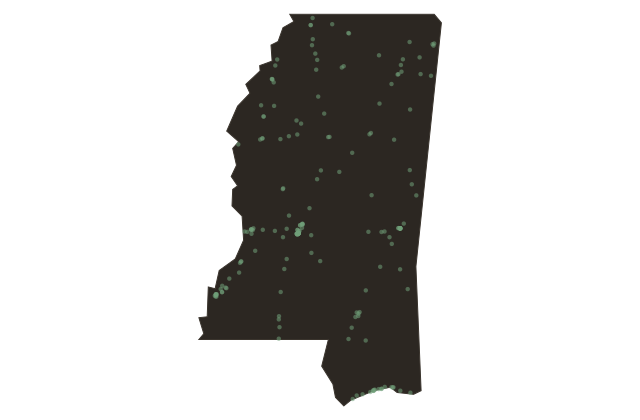
Mississippi
On Fourth Street in Meridian sits a sprawling industrial complex that looks, from the outside, like it belongs to another century. It does. The Soulé Steam Feed Works is the last intact steam engine factory in the United States, and it has been building and repairing machinery on this site since eighteen ninety-two.
George Soulé founded the business in eighteen ninety-two. Meridian at that moment was one of the fastest-growing rail hubs in the South, fed by timber, cotton, and the intersection of multiple rail lines that made it briefly the largest city in Mississippi. The industrial economy around those railroads needed engines, boilers, and heavy equipment to keep moving, and Soulé built a factory to supply it.
What the Soulé works produced over the following decades were patented innovations in steam technology, including the Soulé Rotary and the Spee-D-Twin steam engines, which were sold across the country and internationally. The facility's most remarkable physical feature is its belt-driven machine shop, which runs on the longest operating line shaft in America: a single rotating shaft that once powered dozens of machines simultaneously from a central engine, a system that was standard industrial practice before electric motors made each machine self-powered.
The factory operated continuously from eighteen ninety-two until nineteen eighty, an eighty-eight-year run. The State of Mississippi designated it a Mississippi Landmark in two thousand three and the Official Historical Industrial Museum in two thousand four. The complex is now the Mississippi Industrial Heritage Museum.
Walking through it today is an encounter with the physical reality of nineteenth-century manufacturing: the line shaft overhead, the original tooling on the floor, the belt-and-pulley architecture that once made this building hum. It was listed as a contributing property to the Union Station Historic District on the National Register of Historic Places in nineteen seventy-nine, part of the larger story of Meridian as a rail and industrial center.