Las Vegas Motor Speedway
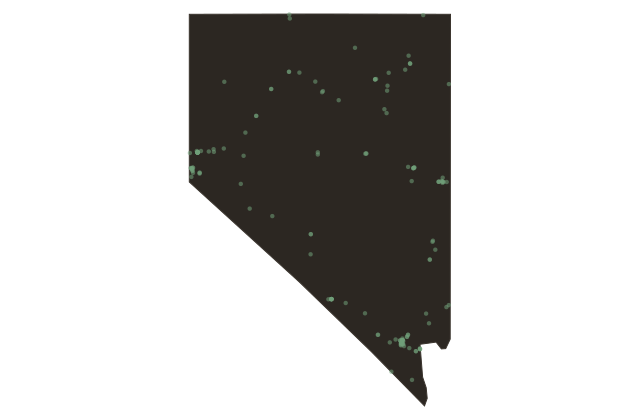
Nevada
About fifteen miles north of the Las Vegas Strip, the oval you can see out here is Las Vegas Motor Speedway, and it arrived in nineteen ninety-six as part of a deliberate expansion of NASCAR's footprint into the American West.
The speedway opened that year, and its first major event was an IndyCar race won by Richie Hearn. The inaugural NASCAR Craftsman Truck Series race followed that same year, with Jack Sprague taking the victory. The full Cup Series arrived in nineteen ninety-eight, when Hall of Famer Mark Martin won the first premier-division race at the track.
The speedway is a one-and-a-half-mile oval, a size that produces high speeds and multiple racing grooves, meaning drivers can run competitively on different lines through the corners. That characteristic tends to generate passing and late-race drama rather than single-file processionals. Las Vegas eventually earned two Cup Series dates per year: a spring race and a fall race that falls within the NASCAR Playoffs, when the championship field has been trimmed and every position carries heightened consequence.
The track also shaped two careers that reshaped the sport. Kurt Busch and Kyle Busch both grew up racing on the Speedway's bullring, a short track on the property that serves as a training ground for young drivers. Both brothers went on to win Cup Series championships, and both credit the early laps on that oval as foundational.
Beyond NASCAR, the facility hosts drag racing, road-course events, and karting. For a city that built its identity on high-stakes action, having a racetrack where drivers regularly top two hundred miles per hour seems entirely fitting.