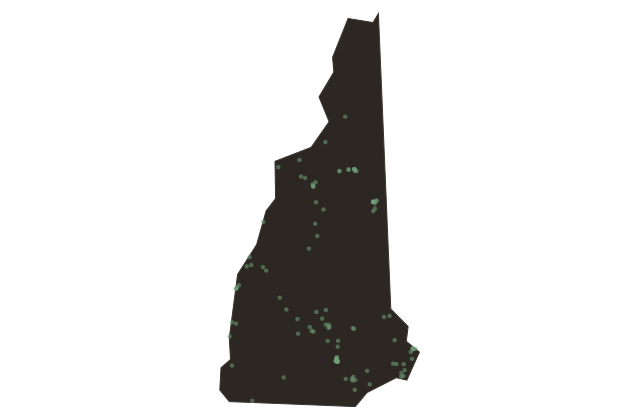
First in the Nation: The New Hampshire Primary
Near Manchester, New Hampshire
Every four years, in the dead of winter, Manchester fills up. Hotel rooms go for hundreds of dollars a night. Candidates appear at diners.
Television crews set up on Elm Street. For a few weeks, the largest city in New Hampshire becomes, by a particular kind of political logic, the center of the American political world. New Hampshire held its first presidential primary in nineteen sixteen.
It voted before other states in nineteen twenty more or less by accident. Town meeting was already scheduled for March, and since the primary could be consolidated with that gathering at no extra cost, there was no reason to move it. New Hampshire voted in March.
Every other state voted later. So New Hampshire voted first. The pattern solidified through the twenties and thirties.
Then in nineteen forty-eight, the speaker of the state House of Representatives, Richard Upton, made the primary more meaningful by passing a law allowing citizens to vote directly for presidential candidates rather than just selecting delegates. The first primary under the new rules took place in nineteen fifty-two. Voter turnout more than doubled.
From that election onward, the New Hampshire primary became genuinely influential in American politics. The primary does not always pick winners. That is actually part of its reputation.
It ends campaigns and surprises frontrunners. Eugene McCarthy came within a few points of Lyndon Johnson here in nineteen sixty-eight, a performance widely credited with pushing Johnson to withdraw. Pat Buchanan shocked George H.
W. Bush in nineteen ninety-two. The results can be difficult to predict and, for the national press corps that descends on Manchester each cycle, that is precisely the attraction.