The French Canadian Migration
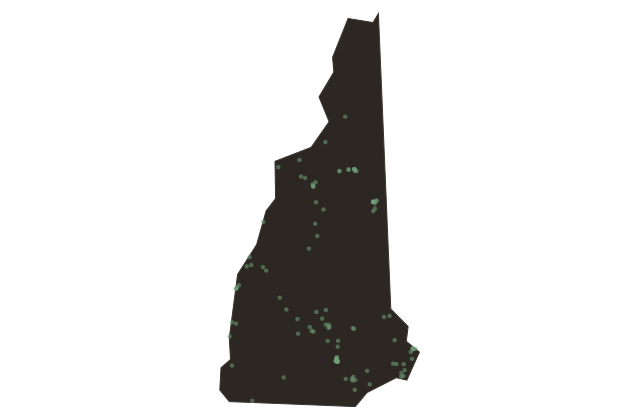
Near Manchester, New Hampshire
In the eighteen sixties, mill agents from the great textile companies of New Hampshire and Maine began traveling into the impoverished agricultural parishes of Quebec, where families were large, land was scarce, and the winters were long. They offered wages. The wages were not generous, but they were wages, which was more than subsistence farming on exhausted soil was providing. The families came south.
Between eighteen sixty and nineteen twenty, approximately nine hundred thousand French Canadians migrated into the mill towns of northern New England, the largest internal migration into the region in the industrial era. They settled into distinct neighborhoods they called Petits Canadas, Little Canadas, and they built parishes, schools, and newspapers in French. Some of those communities maintained French as a daily language into the nineteen seventies, three and four generations after the original migration. The Catholic Church was the institution that held them together, and the tension between the Franco-American parishes and the existing Anglo-Protestant New England culture was not theoretical.
The mill the agents worked for was often Amoskeag Manufacturing in Manchester, New Hampshire. At its peak, Amoskeag employed more than seventeen thousand workers and occupied roughly a mile of mill buildings along the Merrimack River. It was one of the largest textile mills in the world. A prolonged strike in nineteen twenty-two led to wage cuts and restructuring. The mill never fully recovered. In nineteen thirty-five, Amoskeag Manufacturing closed permanently, one of the largest textile mill closures in American history to that date, leaving thousands of Franco-American families in Manchester without the industry that had brought their grandparents across the border.
The mill buildings are still standing along the river. They have been converted to apartments, offices, and restaurants. The Franco-American heritage they housed is documented at the Franco-American Centre in Manchester and in the collections at the University of New Hampshire.