Bell Labs: Where the Modern World Was Invented
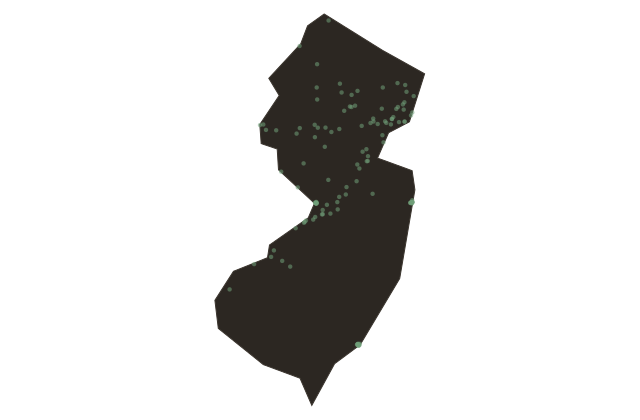
New Jersey
A few miles north of here in Murray Hill, New Jersey, sits a low-slung suburban campus that produced more foundational inventions than possibly any other building in the history of science. Bell Telephone Laboratories was incorporated in nineteen twenty-five as a research arm of AT&T, and in nineteen forty-one it moved its principal operations to a new campus in Murray Hill, a two-hundred-and-twenty-five-acre site beneath the Watchung Mountains that the company had quietly purchased during the Depression.
The campus was designed by research director Mervin Kelly with deliberate intent. The hallways were made extraordinarily long, so that a physicist walking to lunch could not avoid running into a chemist, or an engineer, or a mathematician working on something entirely different. Serendipitous collision was the architecture's point.
It worked. On December twenty-third, nineteen forty-seven, William Shockley, John Bardeen, and Walter Brattain demonstrated the transistor for the first time in a Murray Hill laboratory. The transistor, which replaced the vacuum tube and made miniaturized electronics possible, is arguably the most consequential invention of the twentieth century. The three men shared the Nobel Prize in Physics in nineteen fifty-six.
But the transistor was only the beginning. Bell Labs researchers developed information theory, radio astronomy, the laser, the charge-coupled device that makes digital cameras work, the Unix operating system, the C programming language, and solar cell technology. In total, work done at Bell Labs has been recognized with eleven Nobel Prizes.
Arno Penzias and Robert Wilson, working at the Bell Labs site in Holmdel, New Jersey, in the mid nineteen sixties, stumbled onto the cosmic microwave background radiation, the faint afterglow of the Big Bang. They had been trying to eliminate what they thought was equipment noise. It turned out to be the echo of the universe's birth.
Today the campus belongs to Nokia and continues operating as a research center. The building where the transistor was born still stands.