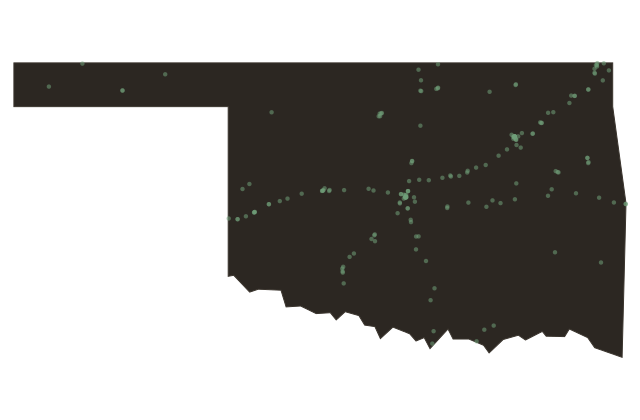
Guthrie: A City Born in a Single Afternoon
Oklahoma
At noon on April twenty-second, eighteen eighty-nine, a pistol shot at the territorial boundary line started the most dramatic real-estate rush in American history. The United States government had purchased the Unassigned Lands, a tract of roughly two million acres that had not been assigned to any specific tribe, and opened it to homestead settlement. Fifty thousand people, some historians estimate, raced across the line simultaneously.
Guthrie did not exist at noon. By sundown it had a population estimated at ten thousand people. They came by railroad, the Santa Fe line ran directly through the townsite, and by horse and wagon from the Kansas border. Some, called Sooners, had slipped in early and hid, claiming their stakes before the legal start. They gave their name to Oklahoma's football team and to a culture of calculated boldness.
The Land Office was already here, having been established before the run. A post office existed. These anchors gave Guthrie an instant administrative identity. By fall of eighteen eighty-nine the tent city had given way to wood-frame storefronts. By the mid-eighteen nineties, brick Italianate commercial blocks were rising.
The Organic Act of eighteen ninety made Oklahoma a United States Territory and designated Guthrie the Territorial Capital. George Steele, a Republican from Indiana appointed by President Benjamin Harrison, became the first territorial governor. Government buildings went up. Newspapers started. A legal and banking community took root.
Oklahoma achieved statehood on November sixteenth, nineteen oh seven, and Guthrie remained the state capital. But it was not to last. On June eleventh, nineteen ten, a middle-of-the-night political maneuver moved the capital seal to Oklahoma City. Guthrie has been outside the mainstream ever since, which is precisely what makes it worth stopping for.