The Termination and the Return
South Carolina
In nineteen fifty-three, the United States Congress declared a policy it called termination. The idea was to end the federal government's special relationship with Native American tribes, dissolve tribal governments, liquidate communal lands, and integrate tribal members into mainstream American society as individual citizens. It was presented as a path to equality. It functioned as another form of dispossession.
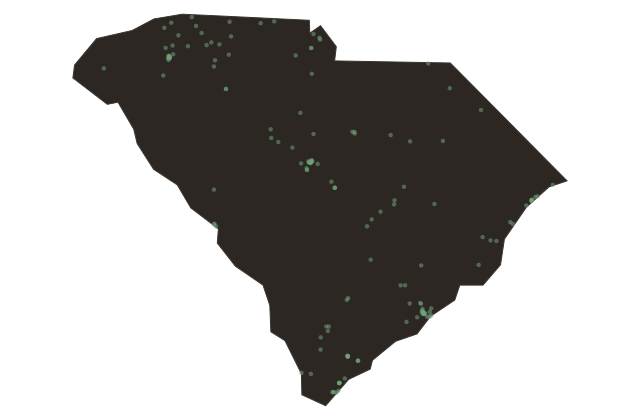
The Catawba Indian Nation of South Carolina was terminated in nineteen fifty-nine under a federal termination act. Federal recognition ended. The tribal government was dissolved. The small reservation land the nation had held since a colonial-era treaty was divided among individual tribal members and essentially sold off. Federal services, including health care and education support, ended.
The Catawba did not dissolve. They continued to live near Rock Hill, South Carolina, just south of Charlotte, in the same geographic area their ancestors had occupied for thousands of years. They continued to make pottery. They held community gatherings. They maintained the social fabric of a nation without any of the legal infrastructure of one.
In nineteen seventy-three, the tribe began the legal fight to reclaim recognition. The argument was built partly on land claims: the Catawba pointed to an eighteen forty treaty with South Carolina, never approved by Congress, that sold off nearly all of the land set aside for them in seventeen sixty-three. The legal battle took twenty years.
On October twenty-seventh, nineteen ninety-three, Congress passed the Catawba Indian Tribe of South Carolina Land Claims Settlement Act. Federal recognition was restored. The state and federal governments together provided fifty million dollars for economic development, land acquisition, and social services, in exchange for the tribe relinquishing the historical land claim.
Fifty million dollars for the land of a nation. The tribe's own leaders acknowledged it was not justice. It was a settlement, which is a different thing. But the recognition was real. The tribal government re-formed. The cultural center in Rock Hill is there because the nation survived the termination and came out the other side with its identity intact.