South Carolina
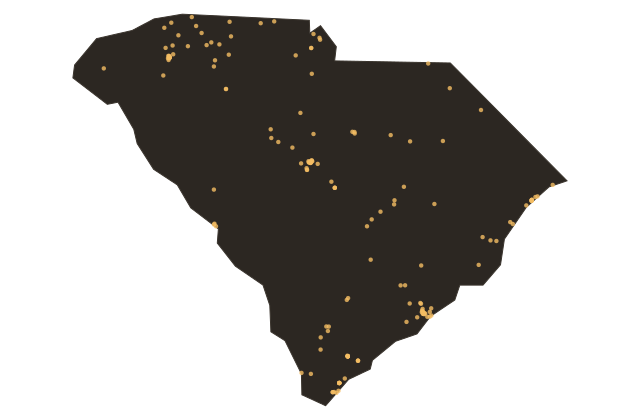
177 stories you can hear on the road. Each dot is one of them.
Across the state
- First to Leave, South Carolina and Secession
- Hamburg, July Eighth, Eighteen Seventy-Six
- Land, Water, and the Shape of This State
- Reconstruction and Its Unmaking
- Rice, Indigo, and the World They Built
- Storms, South Carolina and the Hurricane Coast
- The First Nations of the Carolina Landscape
- The Gullah Geechee, A Culture That Survived
- The Lords Proprietors and the Founding Colony
- The Stono Rebellion, September, Seventeen Thirty-Nine
- The Upcountry Mill Villages
- The Yamasee War, When the Alliance Broke
Near Augusta
Near Beaufort
- Battle of Honey Hill: The USCT's Determined Stand
- Beaufort National Cemetery: One of the Oldest in the Country
- Beaufort: The Newport of the South
- Coosawhatchie, South Carolina
- Gullah: The Language That Crossed the Atlantic
- Hollywood's Beaufort: Forrest Gump, The Big Chill, and Prince of Tides
- Pat Conroy's Beaufort
- Penn Center: The First School and the Last Archive
- Robert Smalls: From Enslaved Pilot to United States Congressman
- Second Battle of Pocotaligo: Cutting the Confederate Lifeline
- The John Mark Verdier House: Lafayette Slept Here
- The Port Royal Experiment: A Laboratory for Freedom
- The Yemassee War: How Beaufort Was First Destroyed
- Union Occupation and the Mansions That Survived
- Yemassee, South Carolina
Near Charlotte
Near Columbia
- Blythewood: Where the Iron Horse Drank
- Bull Street: A Century Inside the Asylum
- Cayce, South Carolina
- Cayce: Twelve Thousand Years on the Congaree
- Columbia Speedway: Where NASCAR Turned on the Lights
- Congaree: The Redwoods of the East
- Hampton-Preston Mansion: Wealth Built on Bondage
- Harry Hampton and the Forest Nobody Was Supposed to Save
- Irmo: Named by Committee
- Millwood: Columns Left by Sherman
- Modjeska Simkins: Columbia's Civil Rights Architect
- Radical Reconstruction and the Black Legislature
- Randolph Cemetery: Buried in History
- The Burning of Columbia
- The Commissioners' Oak
- The Fireflies That Learned to Flash Together
- The Maroon Communities of the Congaree Swamp
- The Planned Capital on the Congaree
- The State House and Its Bronze Stars
- The USC Horseshoe: America's Oldest Freestanding Academic Library
- The World's First Electric Textile Mill
- USC Integrates: September Eleventh, Nineteen Sixty-Three
- Waverly: The HBCU Neighborhood
- West Columbia: The Mill That Changed Everything
Near Greenville
- BMW Spartanburg: When the Peach Orchards Became a Car Factory
- Bob Jones University: Faith, Fundamentalism, and a Decades-Long Reckoning
- Furman University and the Long Road to Integration
- Greenville County Museum of Art: The Wyeth Nobody Expected
- Greenville, South Carolina
- Inman, South Carolina
- John H. Goodwin House
- Max Heller: The Refugee Who Rebuilt Downtown
- Mills Mill: A Self-Contained Cotton World in Greenville
- Old Rutherford Road
- Paris Mountain: Water, the New Deal, and the Corps
- Piedmont Number One: The Mill That Built a Town That Never Was
- Poinsett Bridge: Oldest Arch in the South
- Reedy River Falls: Where the City Began
- Shoeless Joe Jackson: Brandon Mill's Most Famous Linthead
- The Greenville Eight: A Library, a Sit-In, and Jesse Jackson
- The Indian Boundary Line: Cherokee and Carolina
- The Lynching of Willie Earle: The Last in South Carolina
- The Swamp Rabbit: A Railroad's Second Life
- The West End: From Mill Village to Artist District
- Vardry McBee and the Textile Crescent
- William Few Bridge on the South Tyger River
Near Hilton Head Island
- Captain William Hilton and the Naming of the Island
- Charles Fraser: The Man Who Invented Sea Pines
- Fort Howell: Built by the Newly Free
- Gullah Geechee on Hilton Head: Isolation, Culture, and Displacement
- Harbour Town Golf Links and the RBC Heritage
- Hardeeville
- Hilton Head Island
- Sea Island Cotton: The Crop That Built and Broke the Island
- Stoney-Baynard Plantation: The Ruins in the Resort
- The 1893 Sea Islands Hurricane: The Storm That Silenced the Island
- The Battle of Port Royal: Five Hours That Changed the Island
- The First Bridge: 1956 and the End of Isolation
- The Island Before the Island: Ten Thousand Years of Presence
Near Myrtle Beach
- Atalaya: A Scholar's Spanish Dream on the South Carolina Shore
- Brookgreen Gardens, Sculpture on a Rice Plantation
- Chicora, and the First People of This Coast
- Harley Week, Black Bike Week, and Two Rallies on One Coast
- Hurricane Hazel, the Storm That Rebuilt the Coast
- Ocean Boulevard, the Golden Mile, and the Rise of the Motels
- Ocean Drive and the Carolina Shag
- Pine Lakes, the Granddaddy, and the Birth of Sports Illustrated
- The Boardwalk, the SkyWheel, and How a Timber Town Became the Grand Strand
- The Dunes Club and the Golf Capital of the World
- The Grand Strand Today, Twenty Million Strong
- The Pavilion, and the Amusement Park That Made Myrtle Beach
Along the way
- Battle of Cowpens Monument
- Battle of Musgrove Mill
- Battle of Tulifinny: The Citadel Cadets Hold the Line
- Berlin Wall in South Carolina
- Bethesda Presbyterian Church: Where Camden's War Dead Still Rest
- Bishopville: From a Crossroads Tavern to a County Seat
- Blacksburg: Iron Boom on the Air Line
- Camden: Britain's Bloodiest Backcountry Victory
- Camden: South Carolina's Oldest Inland City
- Catawba Clay: Four Thousand Years Without a Wheel
- Chapin, South Carolina
- Charleston Naval Shipyard
- Clarendon County: The Case Before Brown
- College of Charleston, the Oldest Municipal College
- Colleton County Courthouse and the Nullification Fire
- Colonel John Thomas and Jane Thomas
- Cowpens: Where the Revolution Turned
- Denmark Vesey: Free Man in an Enslaved City
- Dexter Edgar Converse
- Dillon and South of the Border
- Drayton Hall: The House That Stopped in 1974
- Edgefield County, South Carolina
- Fairfield County: Where Cornwallis Wintered
- Fort Sumter: April 12, 1861
- Fort Watson and the Maham Tower
- Francis Marion at Tearcoat Swamp
- Francis Marion: The Swamp Fox and His War
- Grave of the Swamp Fox
- H. L. Hunley
- Harleyville: Timber, Rails, and Hidden History
- Hobcaw Barony: Rice, Ruin, and Bernard Baruch
- Huck's Defeat: The Spark That Lit the Carolina Backcountry
- Joseph Rainey: Georgetown's Barber Who Became America's First Black Congressman
- Kingstree Station: A Great American Station
- Ladson: A Planter Family's Long Shadow
- Lamar, South Carolina
- Landrum, South Carolina
- Lincolnville: Built by the Freed
- Little Mountain, South Carolina
- Manning, South Carolina
- Marlboro County: Welsh Settlers and the Pee Dee
- McLeod Plantation: Reading the Quarters
- Musgrove Mill State Historic Site
- Pegues Place
- Pomaria, South Carolina
- Price's Post Office
- Purrysburg: A Swiss Colony That Vanished
- Rainbow Row and What the Colors Conceal
- Reconstruction South Carolina: The Legislature They Destroyed
- Richburg: The Town Founded by a Failed Prophecy
- Santee, South Carolina
- Septima P. Clark Expressway
- Siege of Charleston
- Stumphouse Tunnel and the Railroad That Never Finished
- Summerton, South Carolina
- Sweetgrass Baskets and the Senegambian Rice Coast
- The First Shot, Fort Johnson
- The Florence Stockade
- The Irish Volunteers of Charleston
- The King's Highway: Washington Rode Here
- The Nine of Mother Emanuel
- The Stono Rebellion: The Spanish Offered Freedom First
- The Termination and the Return
- The Wedge Plantation: Tidal Rice and the Lucas Mill
- The Westo Nation: The Indigenous Slave Traders Who Vanished
- The Wharfside Entry: Gadsden's Wharf and the Forty Percent
- The Yamasee War: The Near-Destruction of Carolina
- Three Patriots at Kings Mountain
- Walnut Grove Plantation
- Walterboro: Front Porch of the Lowcountry
- We Shall Overcome Began on a Picket Line in Charleston
- Weston-Grimke Homesite
- William Enston Home, Charleston