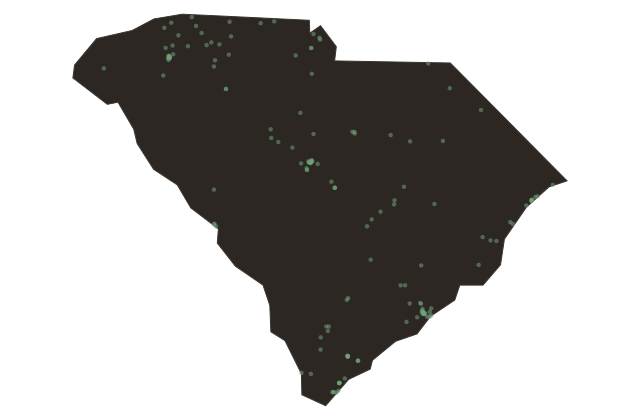
The Upcountry Mill Villages
South Carolina
In the decades after the Civil War, a new South Carolina grew up in the Piedmont, in the red clay country between Columbia and the mountains. It was built around cotton, as always, but the cotton was no longer picked in fields, it was spun and woven in mills. Between eighteen eighty and nineteen twenty, scores of cotton textile mills opened in the South Carolina Piedmont.
The mill belt stretched from Spartanburg through Greenville toward Gaffney and Rock Hill, and it transformed the landscape of the upcountry as thoroughly as rice had transformed the coast. The mills came with villages. A company would build the mill, then build the houses around it, the school, the church, the company store.
Workers, almost exclusively white, recruited from the exhausted tenant farming communities of the rural Piedmont, moved from farms into these compact villages and entered a world where their employer controlled nearly every aspect of their daily lives. They rented their houses from the company. They bought groceries at the company store, sometimes in company scrip rather than cash.
Their children attended the company school. Their pastor's salary might be supplemented by the company. The work itself was hard and loud and dangerous.
Mill workers, called lint heads by outsiders, a term they sometimes reclaimed, stood for twelve-hour shifts in rooms thick with cotton dust that lodged in the lungs and caused the condition known as brown lung disease, or byssinosis. Child labor was common in the early mill era; young children worked alongside their parents. The mill villages produced remarkable community solidarity, their own music, their own vernacular culture, and eventually, in the nineteen thirties, some of the most significant labor organizing drives in the twentieth-century South.