Buffalo Gap National Grassland: The Rim of the Badlands and the Land the Government Bought Back
Near Interior, South Dakota
The Buffalo Gap National Grassland wraps around three sides of Badlands National Park. Drive the perimeter roads and you are moving through a landscape that is difficult to separate visually from the park itself: the same eroded clay formations, the same short-grass prairie, the same buffalo grass running to a horizon that seems farther away than it should be at this altitude.
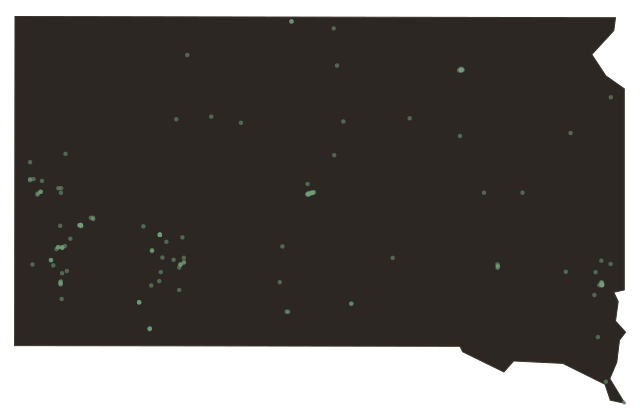
What separates the grassland from the park is a legal category. The grassland was created through the Bankhead-Jones Farm Tenant Act of nineteen thirty-seven, when the federal government began purchasing failed homesteads across the Great Plains and converting them to managed public land. This land had been broken by the plow in the nineteen teens and twenties, planted in wheat and corn that produced well for a few years and then failed when the rains stopped. The families who had filed under the Homestead Act and broken the sod sold out to the government or abandoned their claims. The government bought roughly six hundred thousand acres in this corner of South Dakota and began the long process of removing fences, reseeding native grasses, and letting the prairie recover.
The recovery is real but incomplete. Ecologists working this land document the slow return of species that require undisturbed prairie: burrowing owls, black-footed ferrets reintroduced from captivity, prairie dogs whose colonies sustain the ferrets and the owls and the hawks above them. The soil compaction from decades of tillage takes a century to fully reverse.
The Wounded Knee site is twenty miles east of here, on the Pine Ridge Reservation. The land you are driving through was taken from the Lakota under the treaties that confined them to the reservation, then homesteaded, then failed, then bought back and turned into public grazing land. It passed through three categories of ownership in under a century. The grass is still trying to come back.