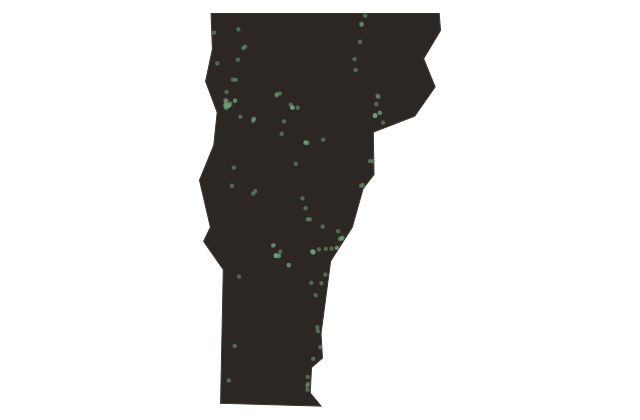
The Irish Lake
Near Burlington, Vermont
For a stretch of the nineteenth century, Lake Champlain was so crowded with Irish immigrants arriving by boat that people called it the Irish Lake.
The famine years brought the largest wave. After the potato crop failed across Ireland beginning in eighteen forty-five, more than a million people died, and another million emigrated in just a few years. A significant share of those who crossed the Atlantic and then pushed north ended up in Burlington, drawn by the booming lumber industry, the growing railroads, and a labor market that, while often harsh and discriminatory, at least offered wages.
By eighteen fifty, nearly a third of Burlington's population was Irish-born. The immigrants clustered in the flats near the waterfront and along the lower streets of the hill, building parishes and mutual aid societies and a culture that shaped the city's political personality for generations. The parish the community built in those years became the institutional heart of the community.
The welcome was not always warm. Irish workers were often pushed toward the most dangerous and low-paying labor: quarrying stone, digging canal beds, laying railroad tracks. Signs barring Irish applicants appeared in shop windows. The nativist Know-Nothing movement had real electoral strength in Vermont in the eighteen-fifties.
It should be noted that records of individual experiences from this period vary and not every documented story has been preserved in equal detail. What the historical record makes clear is that the Irish community of Burlington built its own institutions precisely because it could not fully depend on existing ones. The community's churches, schools, fraternal organizations, and newspapers became the architecture of a parallel city within the city, one that eventually became indistinguishable from Burlington itself.