Aldo Leopold's Sand County Farm
Near Baraboo, Wisconsin
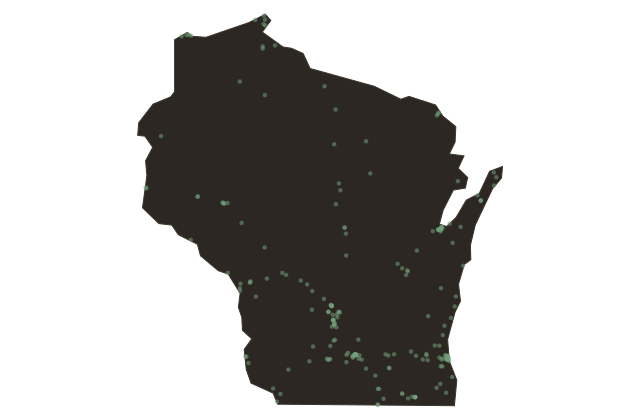
Aldo Leopold bought a worn-out farm in Sauk County, Wisconsin, in nineteen thirty-five for eight dollars an acre. The soil was played out. The previous owner had cut the timber, grazed the land until the grass was gone, and left. Leopold and his family spent thirteen years trying to put it back together. They planted pines by hand. They dug ponds. They watched for the species that were returning and noted when they came.
At a simple converted chicken coop on the property, which the family called the Shack, Leopold spent weekends and wrote. He was not a professional writer; he was a wildlife ecologist at the University of Wisconsin. But the book he assembled from his notes at the Shack, A Sand County Almanac, became one of the most influential works of natural philosophy written in the twentieth century.
The book's central argument was called the land ethic: the proposition that a thing is right when it tends to preserve the integrity, stability, and beauty of the biotic community, and wrong when it tends otherwise. This was a radical idea in nineteen forty-nine, and in many quarters it remains one. It held that the land itself, not just the people on it, had a moral claim that humans were obligated to take seriously.
Leopold did not live to see the book published. He died on April twenty-first, nineteen forty-eight, fighting a brush fire on a neighbor's property. The book was published in November nineteen forty-nine, more than a year later. It shaped the environmental movement, the Wilderness Act, the Endangered Species Act, and the careers of everyone who came after him who wanted to argue that wilderness was worth something on its own terms.
The farm and the Shack are preserved by the Aldo Leopold Foundation. You can visit.