Aztalan: Cahokia's Northern Outpost
Wisconsin
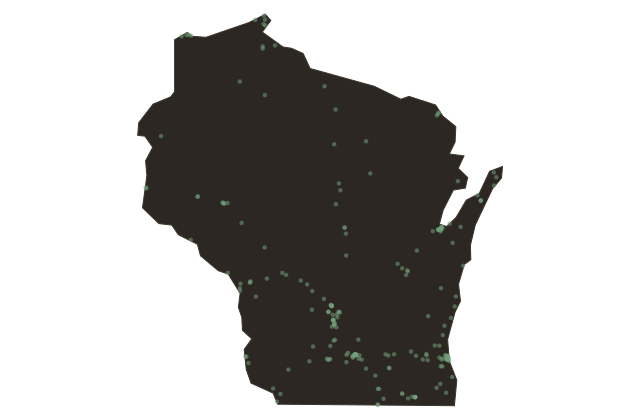
You are driving near one of the most mysterious places in the Upper Midwest. Aztalan State Park sits on the Crawfish River just east of Lake Mills, Wisconsin. What stands here today, a reconstructed palisade wall and a couple of earthen mounds rising from a meadow, represents only the faintest echo of a city that existed roughly nine hundred years ago.
Between approximately ten fifty and eleven hundred A.D., a group of people from the Mississippian civilization arrived in southern Wisconsin and founded a fortified town here. Evidence gathered from generations of archaeological excavation suggests they came from, or were closely affiliated with, Cahokia, the great pre-Columbian city near present-day East Saint Louis, Illinois, which at its peak housed perhaps twenty thousand people and anchored a trade network stretching from the Great Lakes to the Gulf Coast. Aztalan appears to have been Cahokia's northernmost outpost, a colonial settlement pushing into territory occupied by local Woodland peoples.
The Aztalan site once covered more than twenty-two acres. Its builders enclosed it with a massive log-and-clay palisade wall studded with more than thirty watchtowers, a structure that archaeologists read as a deliberate military posture. Inside, they raised three earthen platform mounds, the largest supporting a temple where, evidence suggests, a sacred fire was kept burning. A second mound served mortuary functions. The elite likely resided on the mounds, elevated above the rest of the community both literally and symbolically.
Archaeologists have found evidence of violence at the site: burned structures, human bones bearing cut marks consistent with ritualized treatment. Whether these point to conflict with neighboring peoples, internal hierarchy enforced by force, or ceremonial practices tied to Mississippian religion remains debated.
Then, around twelve hundred A.D., the community vanished. No single explanation has been accepted. Climate shift, soil exhaustion, conflict, or the broader collapse of Cahokia's sphere of influence, possibly all of these together, may have driven the abandonment. The people who left did not return.
The site was recognized by Euro-American settlers in the early eighteen hundreds. A Wisconsin journalist named Nathaniel Hyer gave it the name Aztalan in eighteen thirty-six, drawing a fanciful link to Aztec mythology that scholars have since discredited. But the name stuck. Today the park preserves what remains: two mounds, a partially reconstructed palisade, and a landscape that rewards quiet attention.