The Oneida Relocation: New York to Wisconsin
Near Green Bay, Wisconsin
The Oneida Nation is one of the six original members of the Haudenosaunee Confederacy, the Iroquois, whose ancestral homeland lies in present-day New York. By the early eighteen hundreds, land speculators and state pressure had reduced that homeland from approximately six million acres to thirty-two. The Oneida had nowhere left to go.
In eighteen twenty-one, a delegation arrived at Green Bay led by Eleazar Williams, an Episcopalian missionary of Mohawk descent working in concert with the federal government and the Episcopal Church. He negotiated with the Menominee and Ho-Chunk for land along the Fox River, roughly eight hundred sixty thousand acres, followed the next year by a treaty claiming over six and a half million acres on Lake Michigan's western shore. Both the Menominee and Ho-Chunk protested immediately.
They had agreed to share the land, they said, not surrender ownership. The United States Senate refused to ratify both treaties. The legal dispute stretched on for years.
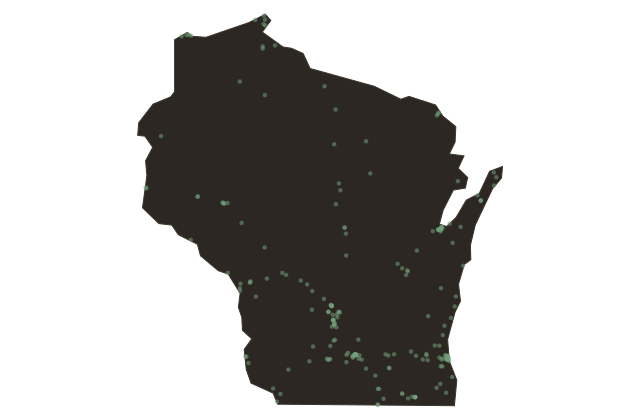
Meanwhile, Oneida families began arriving anyway, settling on a smaller agreed tract west of Green Bay. By eighteen thirty-eight, six hundred fifty-four Oneida were living on the new reservation. The migration continued into the eighteen forties.
The Oneida Nation of Wisconsin today occupies approximately sixty-five thousand acres near Green Bay and is federally recognized. They run their own government, schools, and economic enterprises. The forced migration was real and its costs were permanent.
What they built here, under those conditions, is also real. Both facts belong to the same story.