The Shack: Where Land Ethics Were Born
Near Baraboo, Wisconsin
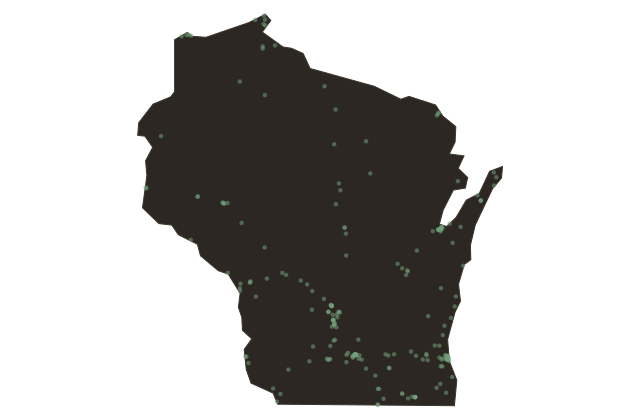
Somewhere out in the sand counties along the Wisconsin River, a converted chicken coop changed how Americans think about the land. That chicken coop, scrubbed out, a woodstove added, a few bunks nailed to the walls, was what Aldo Leopold and his family got when they bought a worn-out farm in Sauk County in nineteen thirty-five.
Leopold was already famous in conservation circles. He had spent years with the U.S. Forest Service in New Mexico and Arizona, and by the mid-nineteen thirties he held the first professorship in wildlife management in the United States at the University of Wisconsin. But the Shack was something different from a career. It was a personal experiment: could a family help a spent, eroded, overgrazed piece of Wisconsin land come back to life?
They planted tens of thousands of trees. They restored prairie. They kept journals. Every weekend, every season for more than a decade, Leopold observed the farm's slow recovery and wrote about what he saw. He watched the geese arrive. He noted the sequence of wildflowers. He tracked the rise and fall of the sandhill cranes. And he thought.
What he thought became a book. A Sand County Almanac was accepted for publication in April of nineteen forty-eight. One week later, Leopold died of a heart attack fighting a grass fire on a neighbor's land. He never saw it in print. Oxford University Press published it in nineteen forty-nine, and it has never gone out of print since, selling more than two million copies and translated into fifteen languages.
The book's final section introduces the land ethic, a phrase Leopold coined to describe a moral framework for human relationships with the natural world. Its core statement is simple and still radical: a thing is right when it tends to preserve the integrity, stability, and beauty of the biotic community. It is wrong when it tends otherwise.
That argument, that soil, water, plants, and animals deserve moral consideration, not just instrumental use, planted the seed for modern conservation ethics, environmental law, and the land trust movement.
The Shack was designated a National Historic Landmark in two thousand nine. The Aldo Leopold Foundation, based nearby in Baraboo, manages it and keeps the restoration work going.