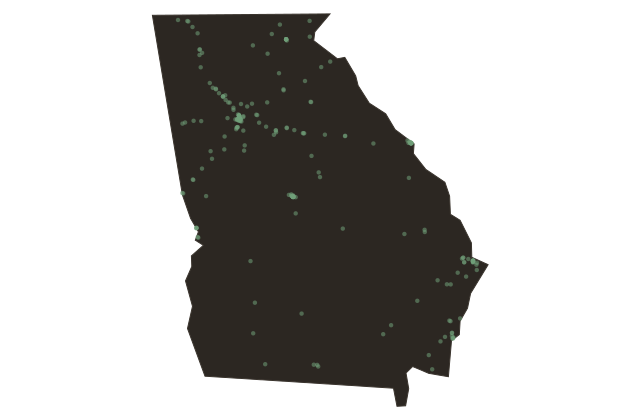
Atlanta's HBCU Cluster: The Movement's Intellectual Infrastructure
Georgia
The Atlanta University Center occupies about a mile of West Atlanta, and for most of the twentieth century it was the densest concentration of Black intellectual life in the United States. Spelman College, founded in eighteen eighty-one by two white Baptist missionaries from New England, was the first institution of higher learning for Black women in the South. Morehouse College, founded in eighteen sixty-seven by the Reverend William Jefferson White, trained ministers and educators in a tradition that produced Martin Luther King Junior, who enrolled at fifteen and graduated at nineteen in the accelerated wartime program. Clark Atlanta University, the Interdenominational Theological Center, the Morehouse School of Medicine, together the consortium became known as the Atlanta University Center.
W. E. B. Du Bois taught at Atlanta University from eighteen ninety-seven to nineteen ten and wrote some of his most important work there, including The Souls of Black Folk. Du Bois used the university's resources to conduct the first systematic sociological studies of Black American life, annual conferences on African American conditions that produced data the broader sociological establishment was not producing.
The Student Nonviolent Coordinating Committee operated from Atlanta in part because the Atlanta University Center existed. Students who had been trained in the HBCU tradition of institutional seriousness and collective responsibility, who had been told by their professors that they were the generation that would change things, were the people who sat down at lunch counters and boarded Freedom Ride buses. The intellectual infrastructure of the Atlanta University Center is not background to the civil rights movement. It is where the movement went to school.