Ella Baker and the Organization That Wouldn't Be Led
Georgia
Ella Baker was fifty-six years old when she convened the meeting at Shaw University in Raleigh, North Carolina, in April of nineteen sixty, that founded the Student Nonviolent Coordinating Committee. She had been working for the Southern Christian Leadership Conference, and she was not happy with how the SCLC operated. The organization centered its power in its ministers, and Baker had spent enough time in movement work to be skeptical of charismatic male leadership as the primary model. She had a different idea.
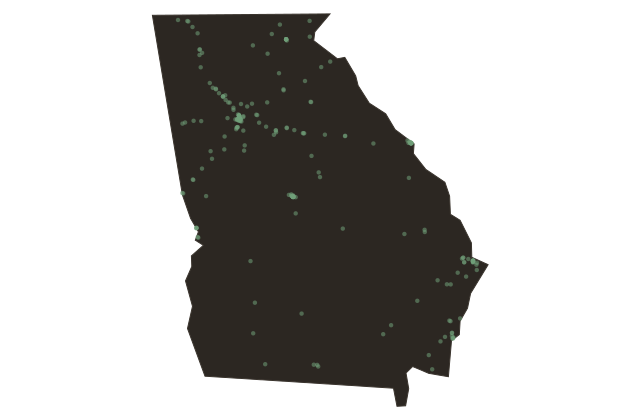
She urged the students at the Shaw meeting not to become a youth auxiliary of the SCLC. She told them to build something that answered to themselves. They did. The Student Nonviolent Coordinating Committee established its operational headquarters in Atlanta and became the movement's most confrontational wing, the organization willing to go where the SCLC was not yet ready to go and to stay there.
Freedom Rides, Mississippi voter registration, the nineteen sixty-four Freedom Summer, the challenge to the Mississippi Democratic Party at the nineteen sixty-four Democratic National Convention, all of that passed through the Student Nonviolent Coordinating Committee. John Lewis, who chaired the organization from nineteen sixty-three to nineteen sixty-six, was twenty-three years old when he stood at the podium at the March on Washington and delivered a speech the march's organizers tried to soften before he gave it. He gave it anyway.
By nineteen sixty-six, Stokely Carmichael had replaced Lewis as chair and the organization was calling for Black Power, a phrase that split the movement's coalition with the white liberal establishment. The rupture cost the Student Nonviolent Coordinating Committee allies and funding. It did not cost the organization its place in the historical record. Its organizational papers are held primarily at the King Center in Atlanta, with a significant complementary research collection, including oral histories and a digital gateway, at Duke University.