Duke Kahanamoku and the Gift of Surfing
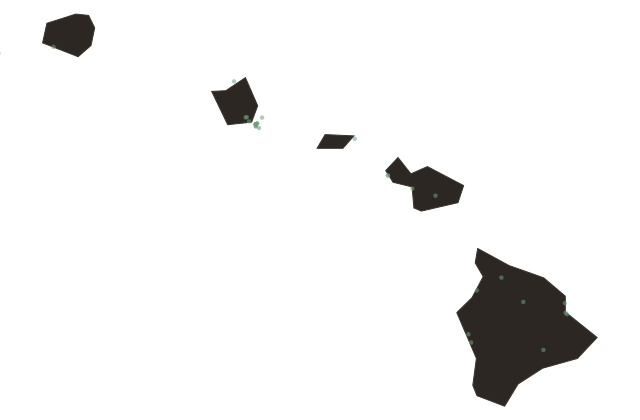
Hawaii
Duke Paoa Kahinu Mokoe Hulikohola Kahanamoku was born in Honolulu in eighteen ninety and grew up in the water at Waikiki. The surfing he learned there, the practice Hawaiians called he'e nalu, wave-sliding, had been a central part of Hawaiian life for centuries. When the first American missionaries arrived in eighteen twenty, they discouraged it as heathenism. By the eighteen eighties it had nearly disappeared. Duke never stopped.
At the nineteen twelve Olympic Games in Stockholm, Kahanamoku won the one-hundred-meter freestyle swimming event in a world-record time and became the first Hawaiian to win an Olympic gold medal. He won again in Antwerp in nineteen twenty. But what he carried across the world in the years between and after those games was not swimming. At Freshwater Beach near Sydney in nineteen fourteen, on a redwood board he had shaped himself, he demonstrated surfing to a crowd of Australian beachgoers and changed the culture of that coast permanently. He took the practice to Southern California, to New Jersey, to exhibitions across Europe. He did this methodically and deliberately, understanding himself as a cultural ambassador for something that belonged to his people and that the world had not yet seen.
What followed, over the following century, was the global surf industry, a multi-billion-dollar commercial enterprise built substantially on a practice that originated in Hawaii and that Hawaiian people had been discouraged from preserving. Duke himself lived to see the early stages of the commercialization and maintained a complicated relationship with it. He became sheriff of Honolulu. He made movies. In nineteen twenty-five, at Newport Beach, California, he used his surfboard to rescue eight men from a drowning boat. The lifeguards on duty said it was the greatest rescue they had ever seen. He was thirty-four years old.