The Hokule'a's Worldwide Voyage
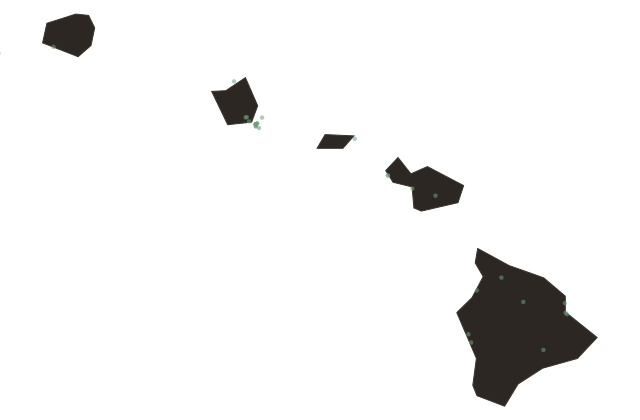
Hawaii
Forty years after the Hokule'a's maiden voyage to Tahiti, the Polynesian Voyaging Society sent the canoe on a different kind of journey. The Worldwide Voyage, which departed from Hawaii in twenty fourteen and returned in twenty seventeen, was not a proof of concept. The concept had been proven. It was a declaration.
The Hokule'a sailed to more than eighty ports in twenty-six nations over three years, covering more than forty thousand nautical miles. The crew visited Pacific island communities whose wayfinding traditions paralleled the Hawaiian practice, Indigenous communities in the Americas whose connection to the ocean predated European contact by thousands of years, and coastal cities where the concept of navigating by stars and swells and bird behavior was a subject of active scientific curiosity. Everywhere the canoe arrived, it arrived as an ambassador of a different understanding of what the ocean is.
The voyage was framed by its organizers as a Malama Honua, a Hawaiian phrase meaning to care for the Earth. The explicit argument was that Indigenous navigational knowledge is not a historical curiosity but a living system of environmental awareness, developed over millennia of reading the ocean closely enough to cross it reliably without instruments. The science of traditional wayfinding, the ability to detect a four-inch swell differential at sea level in open water, to read the migration patterns of specific birds at specific times of year, to feel the refraction of swells around islands that are not yet visible, is a form of environmental knowledge that Western oceanography has only recently begun to document.
Mau Piailug, the Micronesian navigator who had taught the first generation of Hawaiian wayfinders, died in twenty ten, four years before the worldwide voyage departed. His students sailed it.