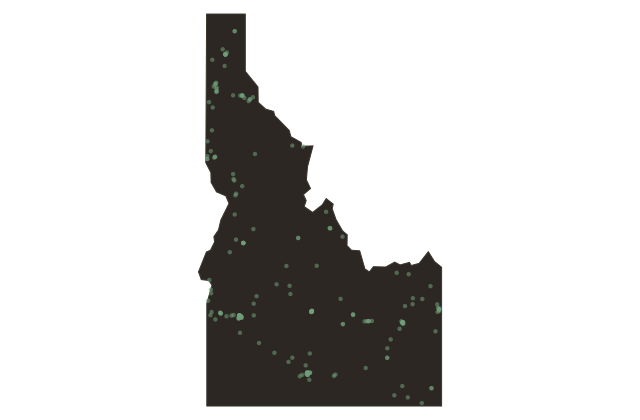
Idaho Falls and the Reactor Nobody Sees From the Highway
Idaho
About thirty miles west of Interstate Fifteen in this part of Idaho, on a flat desert plain called the Snake River Plain, is the Idaho National Laboratory: eight hundred ninety square miles of federal land that contains more nuclear reactors, test facilities, and nuclear waste storage than almost any other site in the country. The INL was established in nineteen forty-nine, under the original name the National Reactor Testing Station, specifically because the Snake River Plain was flat, remote, sparsely populated, and downwind of almost nothing important. The first nuclear-powered submarine reactor was tested here.
Experimental Breeder Reactor One, which sits on the site, was the first reactor in the world to generate usable electricity from nuclear fission. That happened on December twentieth, nineteen fifty-one. The amount of electricity it produced, enough to light four two-hundred-watt bulbs, was less important than the proof that it was possible.
The site is now a National Historic Landmark. The Shoshone-Bannock Tribes of the Fort Hall Reservation live close to the INL boundary. Their treaty rights to hunt, fish, and gather on the surrounding land predate the laboratory's existence.
The camas prairies of southern Idaho were the center of the Bannock trade economy for generations, the camas bulb was the primary caloric staple of the region's tribes, and the prairie produced it in abundance. The potatoes you associate with Idaho grow in this same volcanic soil. The state grows about a third of the potatoes in the United States.
The reactors and the potato farms share the same landscape and neither one advertises the other.