Cajun French: The Language They Punished Children For Speaking
Near Lafayette, Louisiana
A child in a Louisiana public school in nineteen forty-five who spoke French on the school grounds could be paddled for it. That was the policy. The language that had crossed the Atlantic from Normandy, that had survived four generations in Nova Scotia, that had made the crossing in the holds of British ships in seventeen fifty-five and rebuilt itself in the Louisiana bayous over the following century, was, by official state educational policy, a mark of ignorance to be beaten out.
Louisiana's suppression of French instruction in its public schools began in earnest after the nineteen twenty-one state constitution mandated English-only education. The law was driven by Americanization pressures similar to those that targeted German, Italian, and other immigrant languages across the country in the Progressive Era and World War One. But the Cajun French case had a particular brutality: the language being suppressed was not a recent immigrant's tongue. It had been spoken in Louisiana for a hundred and fifty years. It was the first language of large communities in the Acadiana parishes who had no other frame for the world.
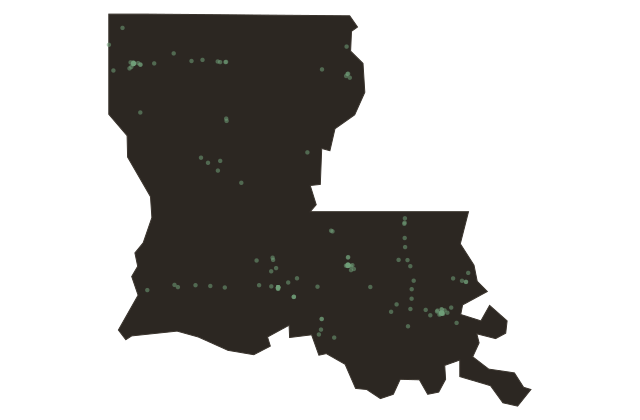
The Council for the Development of French in Louisiana, known as CODOFIL, was established by the state legislature in nineteen sixty-eight to reverse the damage. Since the nineteen seventies, CODOFIL has operated French immersion programs in the Lafayette and Acadiana parishes. The recovery has been partial. Estimates of fluent native Cajun French speakers, which CODOFIL tracks, run in the range of thirty thousand to sixty thousand today, almost all of them elderly. That range reflects the difficulty of counting a community that learned to hide its language.
What is being lost is not a dialect. It is a living archive: folk medicine terms that don't translate, song traditions that require the French to make sense, place-name knowledge that maps the bayou country in a system entirely separate from the English one. When the last fluent speakers die, that archive goes with them unless the immersion programs produce new speakers at a scale they have not yet achieved.