Seward's Folly: The Purchase Nobody Wanted
Alaska
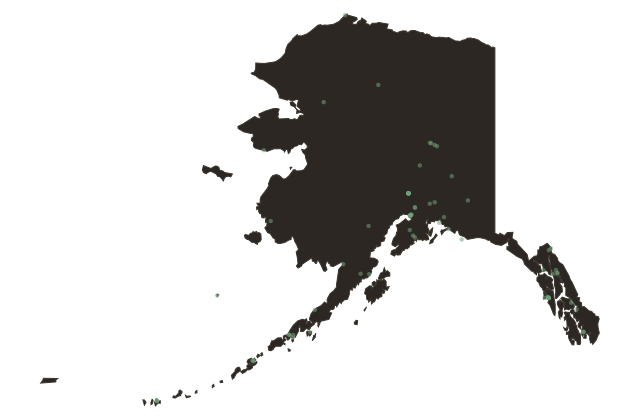
Secretary of State William Seward negotiated the purchase of Alaska from Russia in a session that ran through the night of March twenty-ninth into the early morning of March thirtieth, eighteen sixty-seven. The agreed price was seven point two million dollars, roughly two cents per acre for five hundred eighty-six thousand square miles of land.
The American press was not enthusiastic. Editorialists called it Seward's Folly, Seward's Icebox, and Johnson's Polar Bear Garden, a reference to President Andrew Johnson, who had sanctioned the deal. Critics questioned what use the United States had for a territory of glaciers and polar bears that could not be farmed and would cost more to govern than it would ever produce in revenue. The Senate approved the treaty thirty-seven to two.
No Alaska Native community was consulted. The Russian Empire and the United States had negotiated the disposition of land where approximately three times as many Indigenous people lived as had European and Russian residents. The transaction did not inquire what those people thought of being transferred between empires.
Alaska remained a territory for nearly a century, governed by a succession of federal agencies that treated it as a resource extraction site. It became the forty-ninth state on January third, nineteen fifty-nine, after a decade-long campaign by territorial advocates.
The gold rush that began at Bonanza Creek in eighteen ninety-six, the oil that started flowing from Prudhoe Bay in nineteen seventy-seven, the fisheries that produce more seafood than any other state, the strategic position that made Alaska critical to the Cold War, and the park system that contains some of the last intact wilderness on earth: none of this was visible to the editorial writers who called it a folly in eighteen sixty-seven. They were wrong about the land. They were not wrong about the consultation.